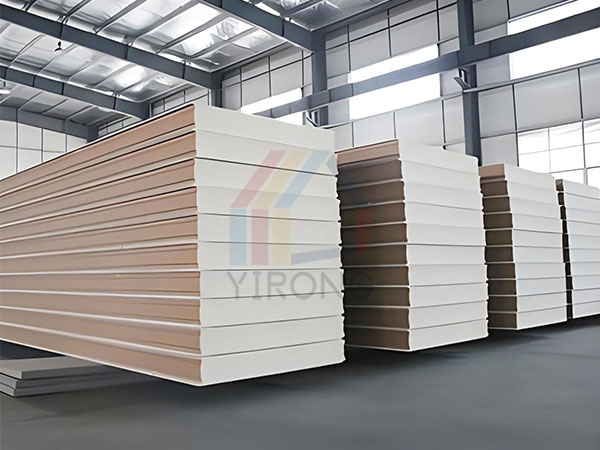
Zhengzhou, Henan Province, China
Now Contact: Do you need PU/EPS/Rock Wool sandwich panels?
Zhengzhou, Henan Province, China
Now Contact: Do you need PU/EPS/Rock Wool sandwich panels?
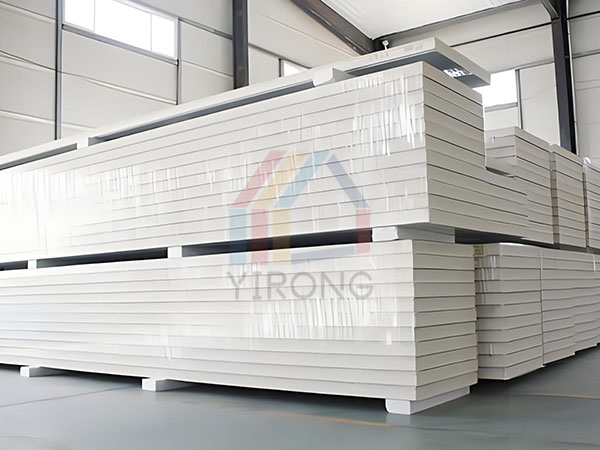
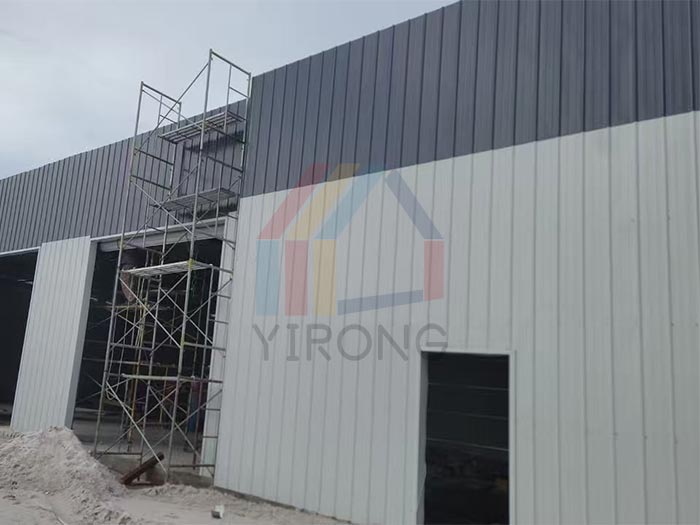
In the construction industry's pursuit of lightweight, high efficiency and energy saving, metal sandwich panels, with their unique structural advantages, are gradually becoming the top stream materials for industrial plants, logistics warehouses, public buildings and other scenes.
It is neither a traditional bulky concrete wall nor a single metal plate, but a composite design of "metal panel + core material" that combines strength, insulation, durability and other functions. But any material has two sides. This article will comprehensively dismantle the true face of metal sandwich panels for you from the analysis of advantages and disadvantages, the verification of real project cases to the selection guide of high-quality suppliers.
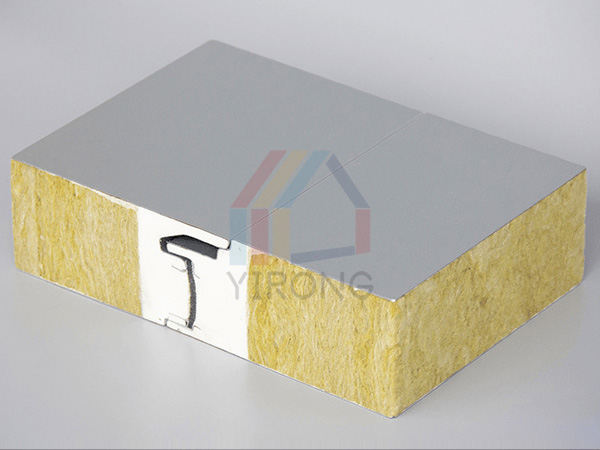
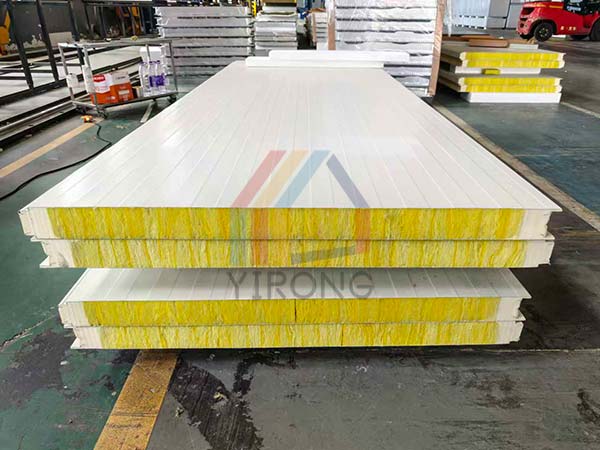
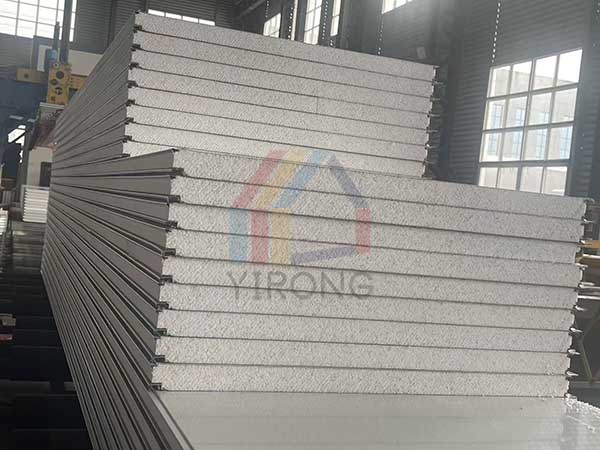
The essence of metal sandwich panels is a "sandwich structure" - the upper and lower layers are metal panels (common galvanized steel plates, aluminum-magnesium-manganese plates), and the middle is filled with core materials (rock wool, polyurethane, polystyrene, etc.). This design allows it to break through the limitations of traditional building materials in multiple dimensions:
1. Lightweight and high strength, reducing structural load
The weight of traditional concrete walls can reach 2000kg/㎡, while the weight of metal sandwich panels is only 80-150kg/㎡ (depending on the thickness of the panel and the density of the core material). Taking a 30,000㎡ industrial plant as an example, the use of metal sandwich panels can reduce the weight by about 40% compared with concrete walls, directly reducing the cost of the basic structure by 15%, which is especially suitable for large-span plants or areas prone to earthquakes.
2. Thermal insulation, significant energy-saving effect
The core material is the "soul" of the metal sandwich panel. Taking the rock wool sandwich panel as an example, its thermal conductivity is only 0.04W/(m·K) (about 1/20 of concrete), combined with the high sealing of the metal panel, it can reduce the building energy consumption by 30%-50%. A cold chain logistics center project in the Dominican Republic once made a comparison: after using metal sandwich panels, the winter heating cost was reduced by 42% compared with the traditional color steel plate + insulation cotton solution, and the air conditioning load in summer was reduced by 35%.
3. Convenient construction, shortening the construction period by more than 50%
The metal sandwich panel adopts the "factory prefabrication + on-site splicing" mode, without the need for on-site formwork and pouring. Taking the construction of a 1,000㎡ wall as an example, the traditional brick wall takes 7 days, while the metal sandwich panel can be installed in only 2 days, and no secondary plastering is required. In the expansion project of an electronics factory in Thailand, due to the tight construction period, the client chose metal sandwich panels and completed the delivery one month ahead of schedule, directly saving 2 million in construction period liquidated damages.
4. Beautiful and durable, adapted to multiple scene requirements
The metal panel can be customized in color (such as matte gray, champagne gold), texture (embossing, printing), and the surface paint process has a corrosion resistance of more than 20 years (salt spray test ≥ 1,000 hours). In a cultural and creative park renovation project in Germany, the designer chose a metal sandwich panel with a stone-like texture as the facade, which achieved a fusion of modern industrial style and natural texture while ensuring low cost.
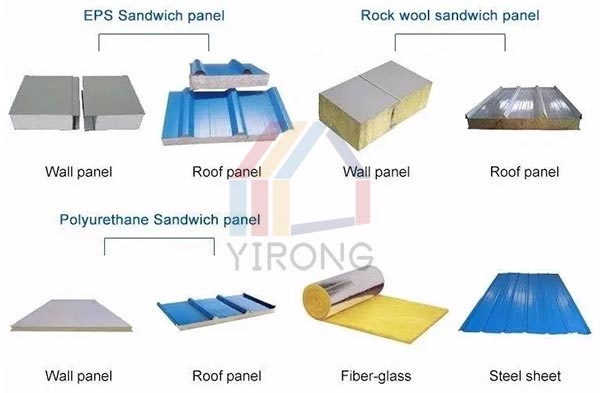
Despite its outstanding advantages, metal sandwich panels are not a universal material, and their shortcomings need to be avoided in design and material selection:
1. Fire resistance depends on the core material and needs to be strictly graded
The metal panel itself is non-combustible (Grade A), but the core material determines the overall fire resistance level: polystyrene (EPS) core material is flammable (Grade B3), polyurethane (PU) is Grade B2, and rock wool (slag wool) is Grade A. If used in crowded places (such as hospitals and schools), rock wool core material must be used. If used in ordinary factory buildings, PU or EPS can be selected according to the budget, but additional fire isolation belts need to be set up.
2. The core material has strong water absorption and needs protection in humid environments
Polystyrene and polyurethane core materials have high water absorption rates (about 3%-5%), and may swell and fall off if exposed to humid environments for a long time. Therefore, it is recommended to use rock wool core material (water absorption rate <1%) in coastal high humidity areas or underground buildings (such as garages), and add waterproof and breathable membrane during installation to avoid the "thermal bridge effect".
3. Connection nodes are prone to leakage and high process requirements
The waterproofing of metal sandwich panels mainly depends on the sealing of board seams. If the sealant is unevenly applied during construction and the self-tapping screws are not equipped with waterproof gaskets, leakage may occur. A logistics warehouse once had 12 leakage points in the rainy season due to the construction team cutting corners, and the subsequent repair cost was as high as 20,000 US dollars. Therefore, it is crucial to choose a professional installation team.
Case 1: An automobile parts factory in the Philippines-large span + high cleanliness requirements
The factory workshop is 200 meters long and 80 meters wide, and needs to meet the requirements of "column-free space + dustproof + constant temperature". Traditional concrete structures cannot achieve large spans, and the color steel plate + insulation cotton solution is difficult to clean and easy to accumulate dust. Finally, the project party chose a metal sandwich panel with 1.2mm thick aluminum-magnesium-manganese panel + rock wool core material (A-grade fireproof), with a hidden buckle installation process:
Large span: no primary and secondary beam design, the indoor net height is increased to 8 meters, meeting the needs of large equipment hoisting.
High cleanliness: fluorocarbon paint on the panel surface, low friction coefficient (≤0.15), and 80% reduction in dust adhesion.
Energy saving: rock wool core material + double-layer hollow glass window, workshop constant temperature energy consumption is reduced by 40%, saving 200,000 US dollars in electricity bills annually.
Case 2: A plateau cultural tourism town in China-anti-corrosion + landscape integration
The project is located in a high altitude and strong ultraviolet area. Traditional color steel plates are prone to rust and fade, affecting the landscape effect. The design team chose a metal sandwich panel with 0.8mm thick aluminum-zinc steel plate + polyurethane core material, and customized imitation wood grain surface treatment:
Anti-corrosion: aluminum-zinc layer (zinc content 150g/㎡) + weather-resistant coating, no rust marks in 5 years.
Landscape adaptation: wood grain color + matte texture blends in with surrounding wooden buildings.
Low maintenance cost: surface treatment process reduces the cleaning frequency from once a month to once a quarter.
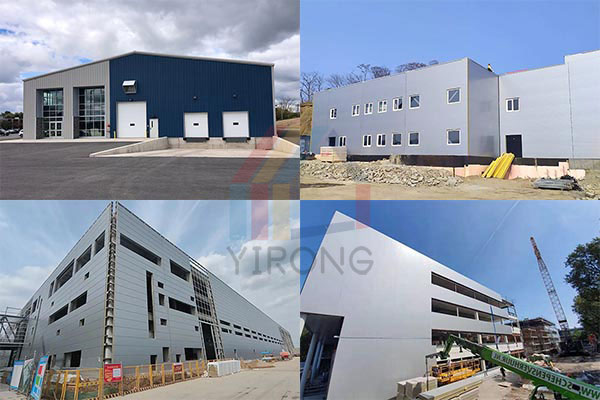
There are mixed brands of metal sandwich panels on the market. Low-priced products often use "thin panels + inferior core materials" to reduce costs, resulting in short life and great safety hazards. When choosing a supplier, it is necessary to focus on the three dimensions of raw materials, production process, and service system. Taking the industry benchmark - Yirong sandwich panel as an example, its advantages are worth referring to:
1. Strict selection and customization of raw materials, guaranteed performance
Yirong adheres to the principle of using sufficient thickness for panels and high purity for core materials: the panels are made of Baosteel/POSCO galvanized steel sheets (zinc content ≥180g/㎡), and the thickness is optional from 0.4mm to 1.5mm. In terms of core material, rock wool uses 400kg/m³ high-density rock wool (ordinary products are only 300kg/m³), and the thermal conductivity is ≤0.038W/(m·K). The polyurethane core material uses Bayer raw materials, and the flame retardant grade reaches B1 (self-extinguishing 3 seconds away from the fire). It has customized "3mm thick 316 stainless steel panel + glass magnesium rock wool core material" for a chemical park, and its strong acid and alkali resistance is 5 times that of ordinary color steel plates.
2. Intelligent production line, zero error in quality control
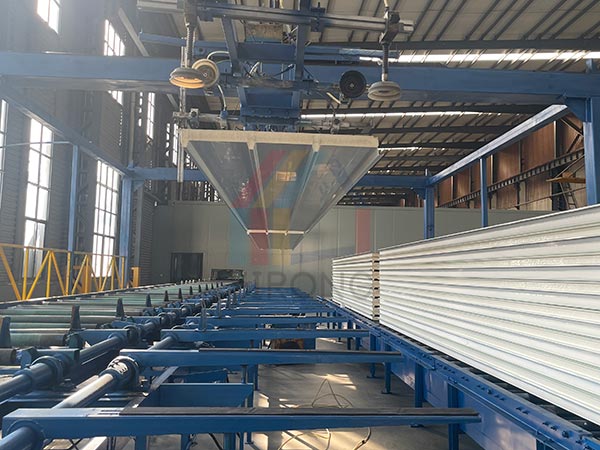
Yirong introduced German TRUMPF laser cutting equipment and Italian Puma Power bending center to achieve cutting accuracy of ±0.5mm and bending angle of ±0.1°. Each plate must undergo triple quality inspection before leaving the factory: appearance inspection (AI visual recognition) → core material density test (X-ray scanning) → overall load-bearing test (1.5 times the design load), and the defective rate is controlled within 0.3% (the industry average is 1%-2%).
3. Full-cycle service, from design to after-sales
Yirong provides free design + on-site measurement + customized production + professional installation guidance + 10-year warranty service. For complex projects (such as curved roofs), its technical team can provide 3D modeling + finite element analysis to ensure structural safety. In a data center project, the customer required special-shaped curved walls + fireproof grade A + 20-year life. Yirong team implemented the hyperbolic panel pressing + rock wool filling + fluorocarbon coating solution perfectly and obtained the customer's high-quality supplier certification.
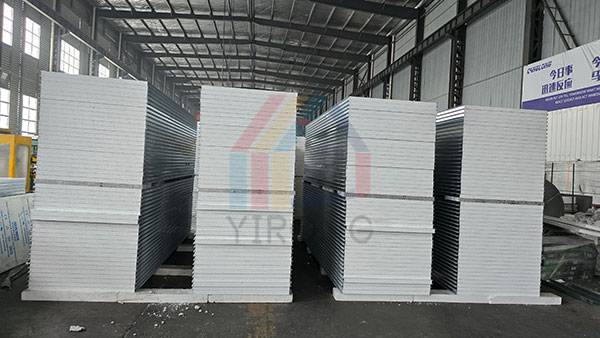
The advantages and disadvantages of metal sandwich panels are essentially "Design + Material selection + Construction" jointly decides. Choosing the right core material (such as rock wool), matching the scene (such as dry/humid environment), and matching professional installation, it can become a money-saving tool + performance guarantee for buildings. Among many suppliers, Yirong sandwich panels have become the preferred brand in industrial plants, logistics warehousing, residential houses, agricultural buildings, commercial buildings and other fields with the advantages of strict control of raw materials, intelligent production, and full-cycle services.
If you are looking for a lightweight, heat-insulating, and durable metal sandwich panel, you may wish to contact Yirong for free solution consultation and let the professional team tailor it for your project!