Zhengzhou, Henan Province, China
Now Contact: Do you need PU/EPS/Rock Wool sandwich panels?
Zhengzhou, Henan Province, China
Now Contact: Do you need PU/EPS/Rock Wool sandwich panels?
With industrial real estate facing the triple pressures of skyrocketing energy bills, tightening carbon emission regulations, and rush orders and deadlines, factory construction has become more than just a simple task of erecting a frame and installing doors. As the exterior cladding of industrial buildings, rockwool wall panels are becoming a must-have for overseas factory owners and developers, offering a combination of energy savings and cost reduction, safety and compliance, and rapid delivery.
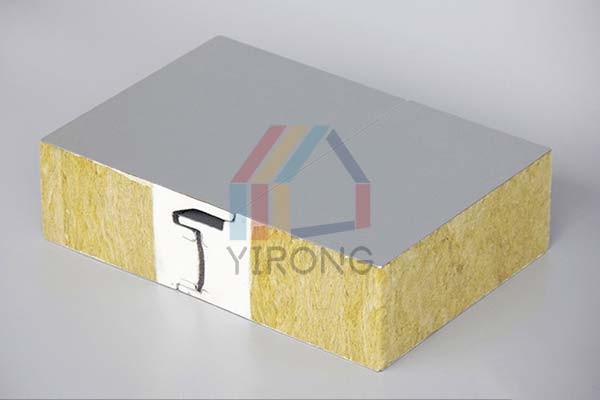
Industrial factories are significant energy consumers: heating, ventilation, and cooling account for 30%-40% of operating costs. Especially in Europe and North America, where natural gas prices have quadrupled in three years and extreme winter weather is frequent, the insulation performance of factories directly determines their survival. The core advantages of rock wool wall panels are:
Ultra-low thermal conductivity: The rock wool core has a thermal conductivity of only 0.04 W/(m²·K), approximately 1/20 that of concrete. Combined with double-sided 0.5-0.7 mm galvanized steel sheeting, the overall thermal conductivity (U-value) is as low as 0.28 W/(m²·K). German TÜV testing shows that factories using rock wool wall panel reduce winter heating energy consumption by 50% and summer cooling demand by 35%. For example, a 20,000 m2 food processing plant could save $280,000 in annual electricity bills.
Seamless insulation: Traditional factories often use color-coated steel sheets and foam panels, which are prone to air leakage and thermal degradation. Rock wool wall panels feature a "sandwich" design, eliminating thermal bridges and cavities. The thermal insulation performance degrades by less than 5% over 10 years, saving more than just electricity bills in the long term.
The EU's EPBD requires a 55% reduction in carbon emissions for all new industrial buildings by 2030, and the US LEED v4.1 certification sets strict targets for embodied carbon in building materials. Factories must not only be economical in use but also reduce emissions.
Rockwool wall panels offer a perfect match for the green landscape:
Embodied Carbon Friendly: Rockwool is made by melting natural rocks like basalt at high temperatures, consuming only one-eighth the energy of aluminum profiles and one-third of concrete. Rockwool wall panels contain only 8kg CO₂e per square meter, 60% less than traditional brick walls, helping factories easily meet LEED's Materials and Resources credits.
Recyclable Closed Loop: Rockwool itself is an inorganic fiber and can be 100% recycled and reused after scrapping, either into new rockwool or road fill. The recycling rate for the accompanying galvanized steel sheets exceeds 90%. A logistics park renovation project in Rotterdam, the Netherlands, achieved zero waste through demolition and construction using rockwool wall panels, receiving a €150,000 circular economy subsidy from the local government.
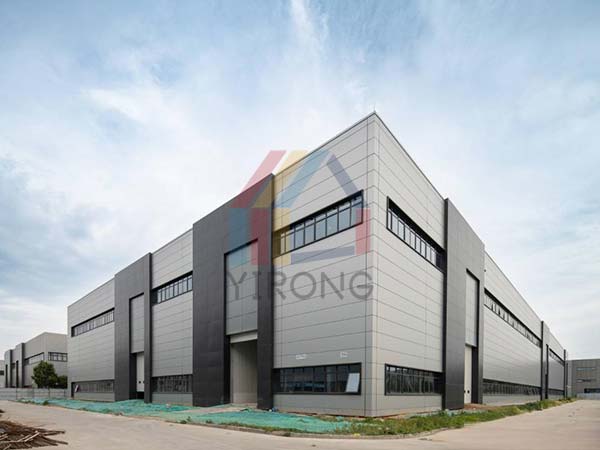
With the global industrial chain restructuring, every day a factory starts production sooner can earn an extra $100,000. However, traditional brickwork and concrete curing are time-consuming, and delays are more common during the rainy season and winter. Customers don't demand beautiful drawings; they demand factories that can be delivered on time.
Factory-prefabricated, on-site assembly: Walls and roofs are cut and shaped to design dimensions in the factory, and only bolts and sealant are required on-site. Traditional construction of a 20,000 square meter factory structure takes four months, while rockwool wall panels only take six to eight weeks. In 2023, an electronics factory in Southeast Asia expanded using rock wool wall panels, completing the main structure before the rainy season, starting production two months early, and securing three additional orders.
Wet-free operation, unaffected by weather: No plastering or walling required, allowing construction to continue even on rainy days. A textile factory in India, once delayed by three weeks due to heavy rain, switched to rockwool wall panels, completing the remaining construction time in just 10 days, avoiding a million-dollar penalty.
Factories store equipment, raw materials, and even hazardous chemicals, making fire and impact resistance essential. Rock wool wall panels are safe, reliable, and robust:
Class A Fire Resistance: Rockwool is a non-combustible material that does not burn or release toxic gases when exposed to fire, with an overall fire resistance limit of 3 hours (EN 13501-2 certified). In a 2022 fire at a chemical warehouse in Texas, USA, a factory with rock wool wall panel suffered only minor damage to the exterior walls, while the internal equipment remained intact, reducing losses by 80% compared to neighboring brick-concrete structures.
Strong Impact Resistance: 0.6mm galvanized steel sheets with a rockwool core offer wind load resistance of up to 1.5kPa, twice the impact resistance of ordinary color-coated steel panels. In typhoon-prone Southeast Asia, rockwool wall panels have become a standard disaster-resistant option for factories.
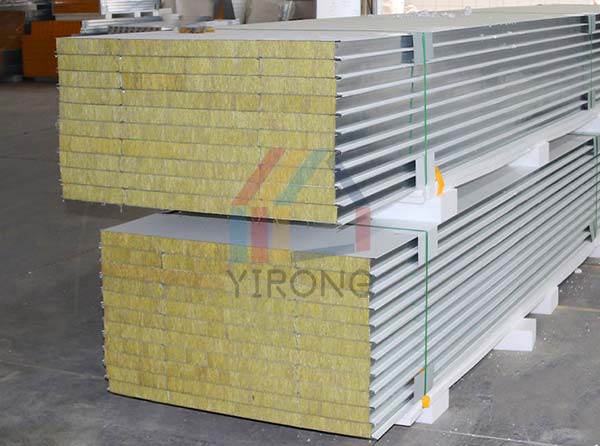
For factory owners, rock wool wall panels offer far more value than just a single panel. They are energy-saving valves that reduce operating costs over 20 years, a green pass for complying with new carbon emission regulations, an accelerator for meeting construction deadlines, and a protective shield for asset security.
As global industrial real estate shifts from scale expansion to quality-focused development, choosing rock wool wall panels means choosing a more economical, greener, faster, and more stable factory for the future.