Zhengzhou, Henan Province, China
Now Contact: Do you need PU/EPS/Rock Wool sandwich panels?
Zhengzhou, Henan Province, China
Now Contact: Do you need PU/EPS/Rock Wool sandwich panels?
For companies planning to build factories, warehouses, logistics centers, or cold storage facilities. The choice of wall materials not only affects the construction budget but also the construction cycle, building insulation performance, and long-term operating costs. Metal sandwich panels and traditional brick walls each have their advantages. The real difference lies in "which solution better suits the building's purpose, local climate, and life-cycle cost requirements?".
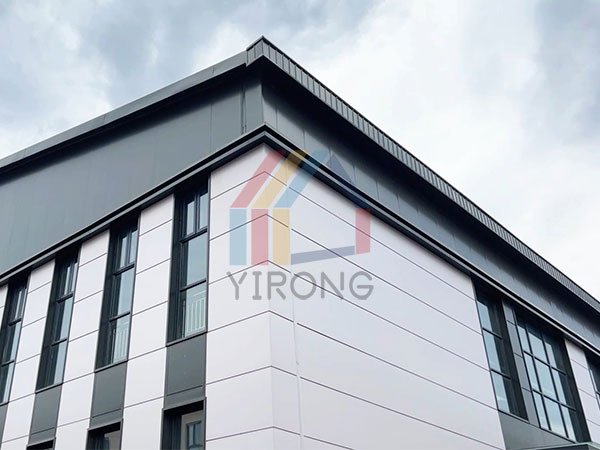
The cost of traditional brick walls typically includes bricks, mortar, labor for masonry, plastering, painting, and the additional insulation system if insulation is required.
Metal sandwich panels integrate the metal facing layer with the insulation core, typically reducing on-site masonry and some subsequent finishing processes.
Metal Sandwich Panels: Suitable for standardized, large-area enclosures with fewer construction steps.
Traditional Brick Walls: Mature materials and construction methods, suitable for building designs requiring masonry walls.
Therefore, for large-area steel structure factories and warehouses, sandwich panels may offer better overall cost competitiveness. However, the final price still depends on panel specifications, core material, transportation distance, local labor costs, and fire protection requirements.
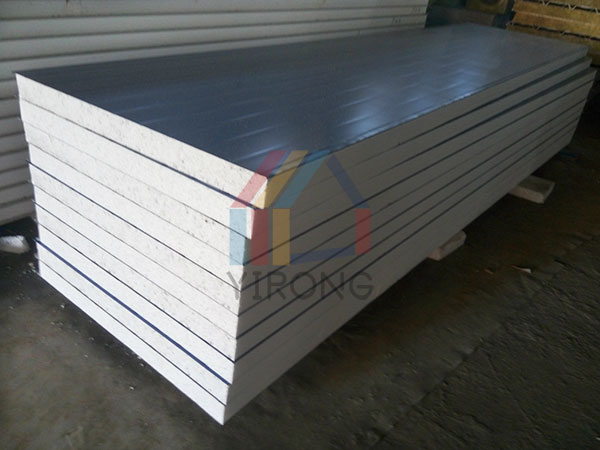
Traditional brick walls require on-site masonry, followed by curing, plastering, and subsequent finishing work according to process requirements.
Metal sandwich panels are prefabricated in the factory and can be installed on the steel structure frame according to the design after arriving on site. This reduces some wet work and makes it easier to coordinate with the main steel structure construction.
For factories, logistics warehouses, and commercial buildings requiring rapid production, the prefabrication of sandwich panels helps shorten the enclosure construction time.
However, the actual construction period still depends on the progress of the main structure, on-site equipment, construction personnel, and weather conditions; all project duration differences cannot be simply attributed to wall materials.
Traditional brick walls have a certain thermal inertia, but their insulation capacity depends on the wall thickness, material composition, and whether an additional insulation layer is installed.
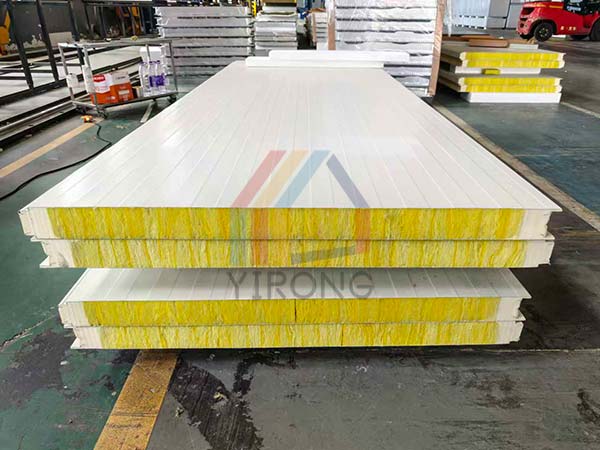
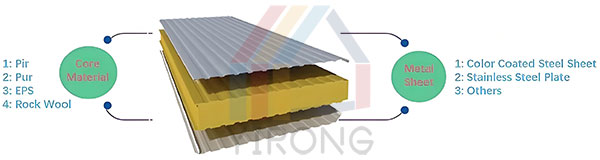
Metal sandwich panels reduce heat transfer through their insulating core material. Common types include:
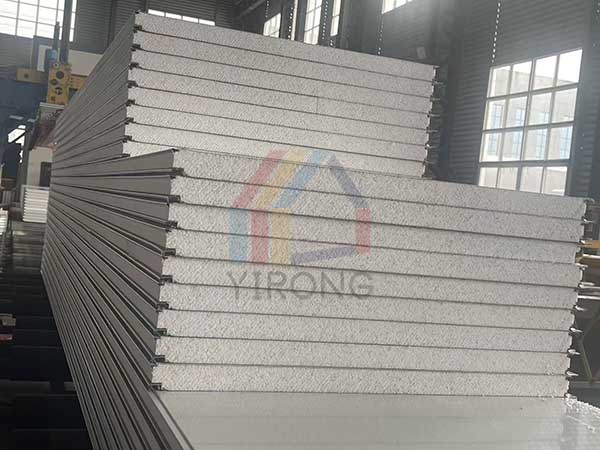
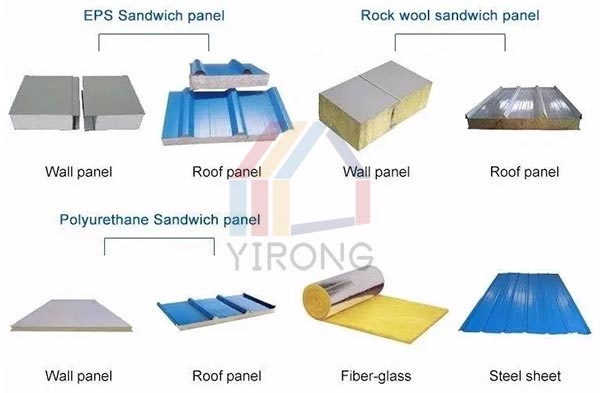
EPS sandwich panels: Economical and practical, suitable for general insulation needs.
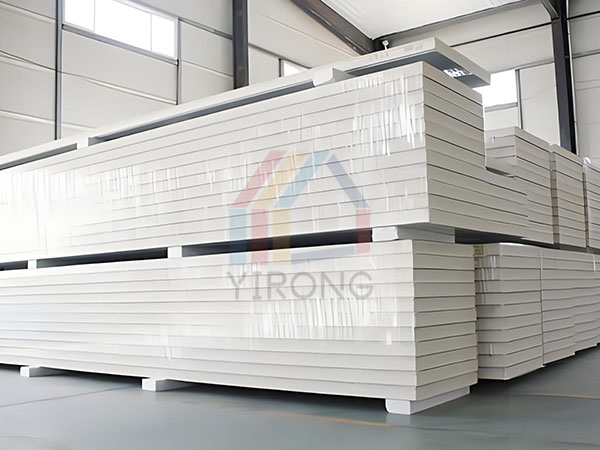
PU sandwich panels: Excellent insulation performance, suitable for factories, warehouses, and temperature-controlled buildings.
PIR sandwich panels: Balance insulation performance with specific fire resistance requirements; the specific rating depends on the test report.
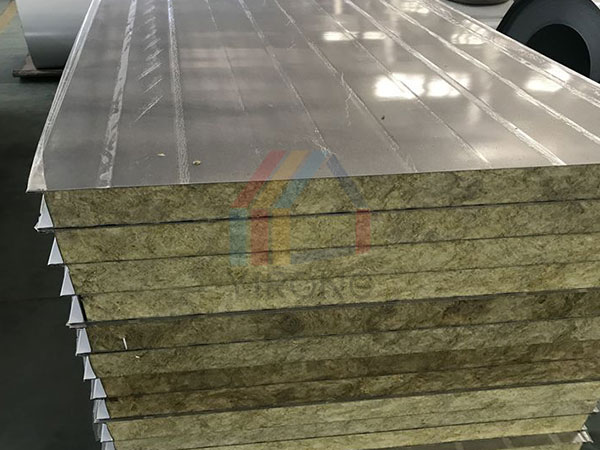
Rock wool sandwich panels: Good fire resistance, suitable for buildings with high fire safety requirements.
For factories in hot regions or warehouses requiring refrigeration, choosing the right core material thickness and ensuring proper sealing of the joints helps reduce heat transfer from the building envelope, lessening the load on air conditioning and refrigeration systems.
According to the "State of Buildings and Construction 2025-2026" report published by the United Nations Environment Programme and the Global Alliance for Building and Construction, the building and construction sector accounts for approximately 28% of global energy consumption; improving building energy efficiency is a crucial direction for the industry.
It's important to note that actual energy-saving effects are also closely related to roof insulation, window and door airtightness, ventilation, equipment efficiency, and local climate; they cannot be judged solely based on wall materials.
The performance of metal sandwich panels depends on the metal plating, surface coating, core material quality, joint sealing, and installation method. Coastal salt spray, high humidity, and industrial corrosive environments require more targeted corrosion protection designs.
Traditional brick walls require attention to cracking, water seepage, mortar aging, and surface finishing maintenance.
Regardless of the chosen option, the design should be tailored to the project environment, and a reasonable inspection and maintenance plan should be developed.
| Comparison Criteria | Metal Sandwich Panels | Traditional Brick Walls |
|---|---|---|
| Initial Cost | Depends on panel specifications and installation conditions | Depends on masonry, plastering, and labor costs |
| Construction Speed | Prefabricated for faster installation | Requires more on-site construction processes |
| Thermal Insulation | Customizable core materials and thicknesses | Depends on wall construction and additional insulation |
| Fire Performance | Depends on core material, system design, and certification | Depends on brick materials, wall construction, and applicable codes |
| Typical Applications | Steel structure factories, warehouses, and cold storage facilities | Masonry buildings and projects suited to brick walls |
| Maintenance | Focuses on coating, joints, and fasteners | Focuses on cracks, water leakage, and surface finishes |
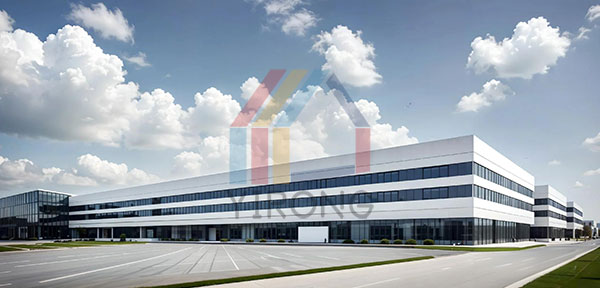
If the project prioritizes rapid construction, lightweight enclosure, insulation performance, and standardized installation, metal sandwich panels are generally a better priority for evaluation.
If the building design requires traditional masonry walls, higher local impact resistance, or local construction conditions are more suitable for brick walls, traditional brick walls still have practical value.
For modern steel structure factories and warehouses, procurement decisions should comprehensively consider material, labor, transportation, installation, energy consumption, and maintenance costs, rather than simply comparing initial quotes per square meter.
Yirong Group provides integrated solutions for steel structure buildings and metal sandwich panels. We can assist clients in planning more suitable building envelope systems based on project purpose, local climate, and insulation requirements.