Zhengzhou, Henan Province, China
Now Contact: Do you need PU/EPS/Rock Wool sandwich panels?
Zhengzhou, Henan Province, China
Now Contact: Do you need PU/EPS/Rock Wool sandwich panels?
A significant shift is occurring in the construction industry. The focus is no longer simply on "building," but on faster construction, lower operating costs, higher energy efficiency, simpler construction, and longer lifespans. This presents an opportunity for sandwich panel.
Global building area continues to grow.The "Global Status Report for Buildings and Construction 2025–2026" released by UNEP and GlobalABC shows that the global building stock reached approximately 273 billion square meters in 2024, representing an annual growth of about 1.7%. Meanwhile, approximately 12.7 million square meters of new building area are added globally every day. The construction industry accounts for approximately 28% of global energy demand and contributes about 37% of global emissions.
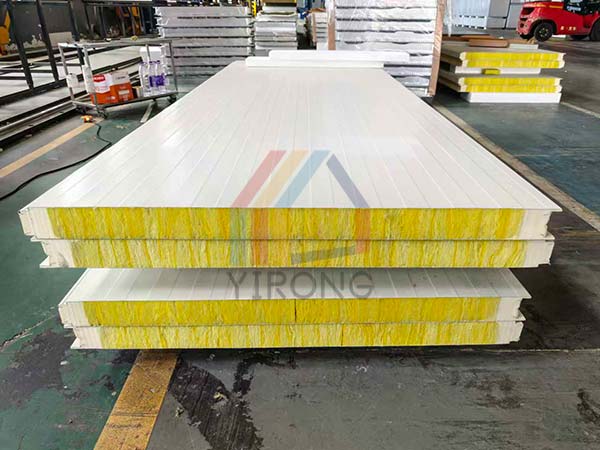
This signifies a very clear trend: the world will continue to require a large number of new buildings in the coming decades, while a significant number of existing buildings will need upgrading.
For investors, the real focus should not be on a single building type, but rather on fundamental materials that will generate sustained demand as the scale of construction grows.Sandwich panels fall into this category。
Market research firm Grand View Research predicts that the global sandwich panel market will grow from approximately $9 billion in 2023 to approximately $14.9 billion in 2030, representing a CAGR of approximately 7.7% from 2024 to 2030.
This is not a short-term trend, but a market that grows in tandem with global construction, industrialized construction, and energy-saving demands.
One of the biggest pain points of traditional construction is the long on-site construction cycle. Brick walls need to be built, cement walls need curing, insulation layers need to be installed separately, and exterior walls require subsequent treatment.
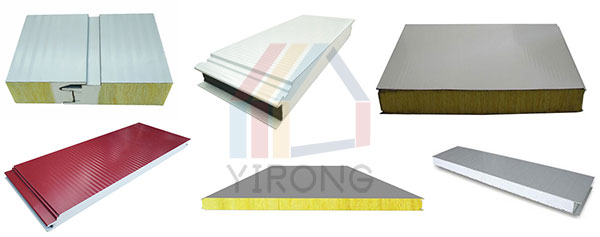
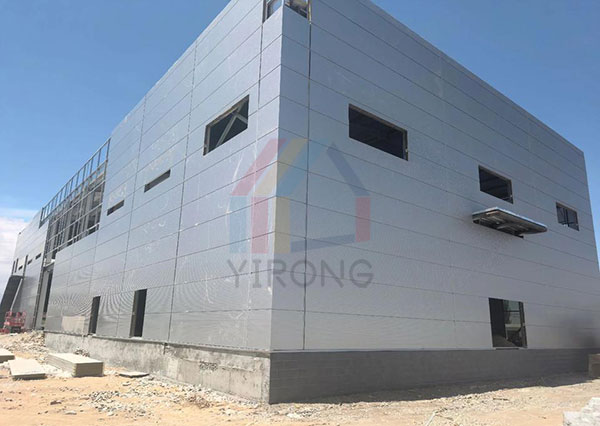
Sandwich panels integrate the structural base layer, insulation layer, and external cladding into a single industrialized product. After factory production, they can be quickly installed on-site. This means construction projects can significantly reduce wet work and on-site labor requirements.
This is crucial for investors, as the global construction industry faces a common challenge: rising labor costs and a growing difficulty in finding skilled workers. The value of prefabricated and modular construction lies in shifting more work from uncontrollable on-site environments to controllable factories.
Market research also shows that key drivers of demand for prefabricated panels include faster construction speeds, lower labor costs, and reduced material waste. Therefore, the competitiveness of sandwich panel is not just about material prices. Their true competitiveness lies in helping clients save time and costs throughout the project.
If you are an investor, you should pay particular attention to one key word: energy efficiency.
IEA data shows that in 2024, buildings will account for approximately 30% of global energy demand. The global construction industry is facing increasingly stringent energy efficiency requirements.
A recent report by UNEP and GlobalABC indicates that approximately $5.9 trillion in global investment is needed in building energy efficiency by 2030 to better align with the global net-zero path. This means the value judgments of building materials will gradually change.
In the past, customers might have only asked, "How much does this wall cost per square meter?"
In the future, customers are more likely to ask, "How much energy cost can this wall save me?"
This is a significant opportunity for sandwich panels to evolve from ordinary building materials to high-performance building materials.
Investors cannot only look at the purchase price. The true cost of a building should include:
Purchase cost + Construction cost + Labor cost + Energy cost + Maintenance cost + Life-cycle cost.
For example, if a factory's building envelope insulation is inadequate, it will require continuous cooling in summer and continuous heating in winter. The initial material cost savings may very well be recouped through higher energy bills over the next decade or more.
Therefore, future competition in building materials will not solely revolve around: "Who is cheaper?"
But will increasingly shift towards: "Who can reduce the cost of building operations?"
This is also the reason for the continuous development of different core materials such as PU, PIR, and rock wool. Different buildings, depending on their intended use, can choose different insulation, fireproofing, and performance solutions.
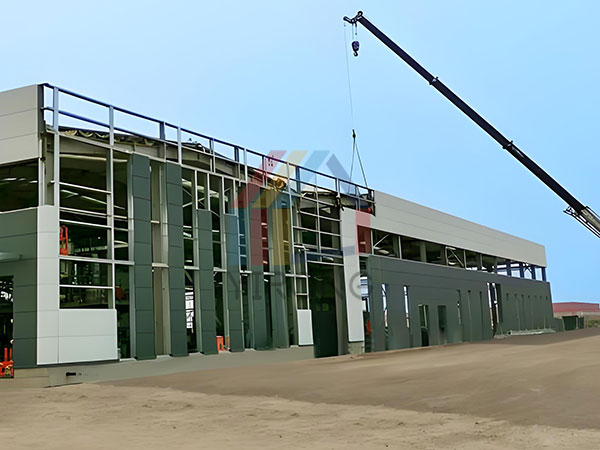
The construction industry in the next twenty years is likely to increasingly resemble the manufacturing industry. Designs are completed on computers, components are manufactured in factories, and rapid on-site assembly is carried out. This is the core logic of prefabricated construction.
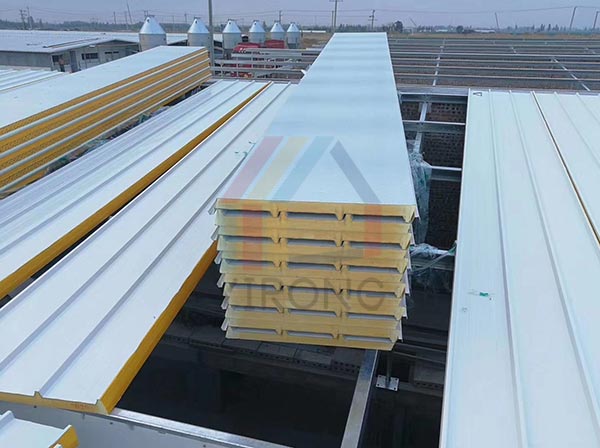
Sandwich panels are naturally suited to this system. They can be standardized in production, mass-produced, and have unified quality control, and can be used in conjunction with steel structures, modular buildings, cold storage, industrial plants, warehouses, and commercial buildings.
For global investors, this means sandwich panels have a very wide range of applications:
*Industrial plants
*Warehousing and logistics
*Cold storage
*Food processing plants
*Automotive repair shops
*Agricultural buildings
*Commercial buildings
*Sports stadiums
*Temporary buildings
*Modular buildings
The more application scenarios, the stronger the market's resilience.

If investors believe that the sandwich panel market is growing and therefore producing ordinary sandwich panels will guarantee profits, this is a dangerous misconception.
The truly competitive companies of the future will not necessarily be those producing the cheapest products, but rather those capable of continuously improving performance, automation, quality control, and system solutions.
Future competitive directions for sandwich panels may include:
1. Better thermal insulation performance
Reducing energy consumption during building operation.
2. Higher fire resistance
As building codes in various countries continue to improve, fire safety will become increasingly important.
3. Longer lifespan
Customers are increasingly focused on the entire building lifecycle, not just the initial price.
4. Lighter and stronger
Reducing transportation costs while improving installation efficiency.
5. Higher factory automation
Improving production efficiency and product consistency.
6. More environmentally friendly material systems
The future construction industry will increasingly emphasize material lifecycles and recycling.
7. More Complete Systematic Solutions
From simply selling panels, the focus is shifting to integrated building envelope systems encompassing walls, roofs, insulation, fireproofing, doors and windows, and drainage.
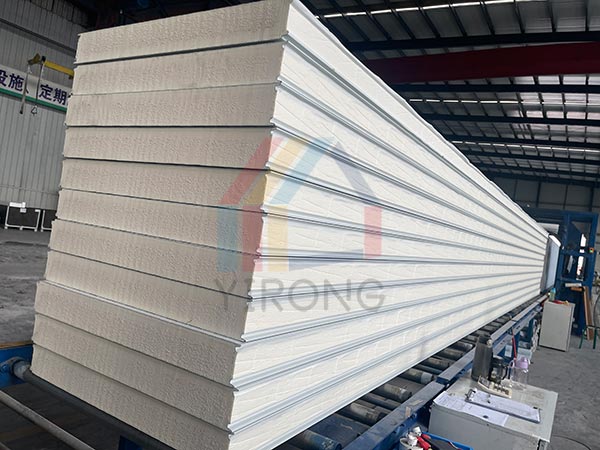
In the future, customers may not truly need 1,000 square meters of sandwich panel. Instead, they may need a building that can be quickly constructed, energy-efficient, meets local regulations, and is immediately usable.
Therefore, excellent suppliers should be able to integrate sandwich panels with:
steel structures + roofing systems + wall systems + doors and windows + drainage + insulation + fireproofing + transportation + installation.
This creates greater customer value and reduces the coordination costs associated with finding multiple suppliers. For businesses, this means upgrading the business model from selling materials to selling building envelope systems, and further to selling complete building solutions.
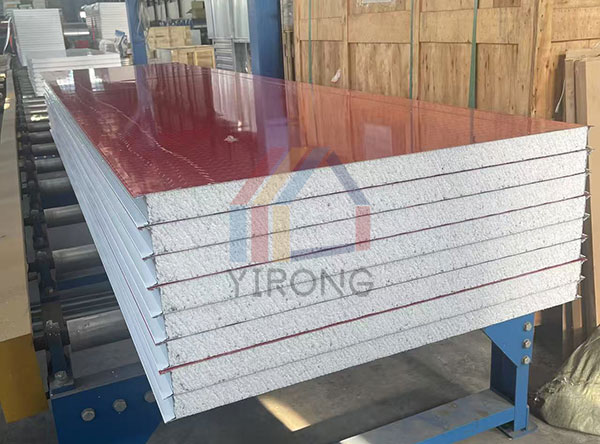
From an investment perspective, sandwich panels are underpinned by several long-term trends:
Continued growth in global building area
↓ Continued development of industrialized construction
↓ Continued rise in labor costs
↓ Increasingly stringent energy efficiency requirements for buildings
↓ Continued increase in energy efficiency investment
↓ Expanding demand for prefabrication and modularization
↓ Increased demand for high-performance building envelope systems
These trends will not disappear with the end of a single economic cycle.
On the contrary, they are likely to continue to impact the construction industry for the next 10, 20 years, or even longer.
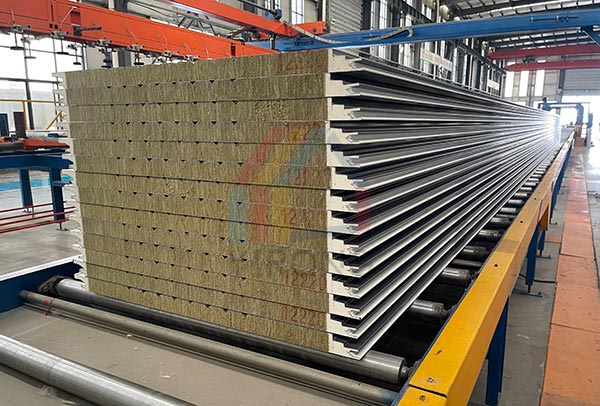
If you are looking for investment opportunities in the sandwich panel sector, you shouldn't just compare prices per square meter.
More important factors are:
① Production Capacity
Does the company possess stable, large-scale production capacity?
② Automation Level
Can it reduce labor costs and maintain product consistency?
③ Product Portfolio
Can it offer products with different performance characteristics, such as PU, PIR, and rock wool?
④ Quality System
Does the company possess comprehensive capabilities for raw material, production, and finished product testing?
⑤ International Market Capabilities
Does the company possess experience in exporting, packaging, transportation, and overseas projects?
⑥ Customization Capabilities
Can the company design products to suit different countries and building applications?
⑦ System Solution Capabilities
Can the company upgrade from selling single panels to providing complete building envelope systems?
These capabilities determine whether a company can stand out in fierce price competition.
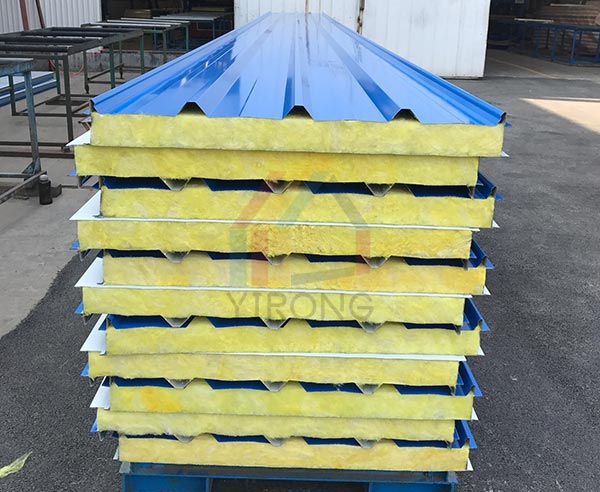
From an investor's perspective, the real reason sandwich panels are worth paying attention to is not because they are a new material. On the contrary, they have already been validated by numerous real-world construction projects.
They represent a larger trend: industrialized production, rapid construction, energy efficiency, building energy conservation, and modular construction.
The future construction industry requires faster construction speeds, lower labor inputs, higher energy efficiency, and more controllable project costs. Sandwich panels stand at the intersection of these trends.
Therefore, instead of asking, "Is sandwich panel a hot product now?"
it's better to ask, "Will the construction industry need faster, more energy-efficient, and more effective building envelope systems in the next twenty years?"
If the answer is yes, then sandwich panels are worth long-term attention.
For investors, what's truly worth focusing on isn't a single sandwich panel, but the entire opportunity for industrialized building upgrades behind it.