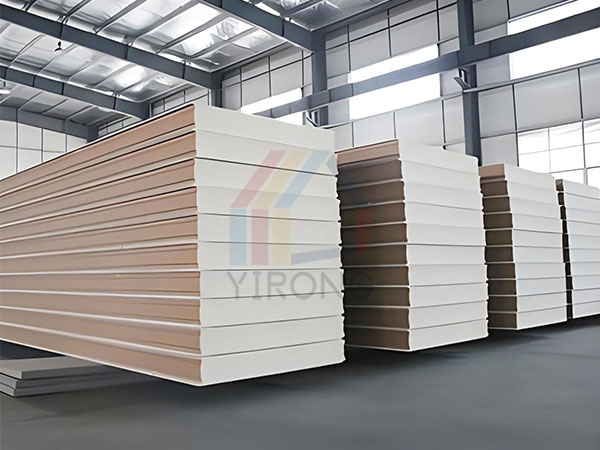
Zhengzhou, Henan Province, China
Now Contact: Do you need PU/EPS/Rock Wool sandwich panels?
Zhengzhou, Henan Province, China
Now Contact: Do you need PU/EPS/Rock Wool sandwich panels?
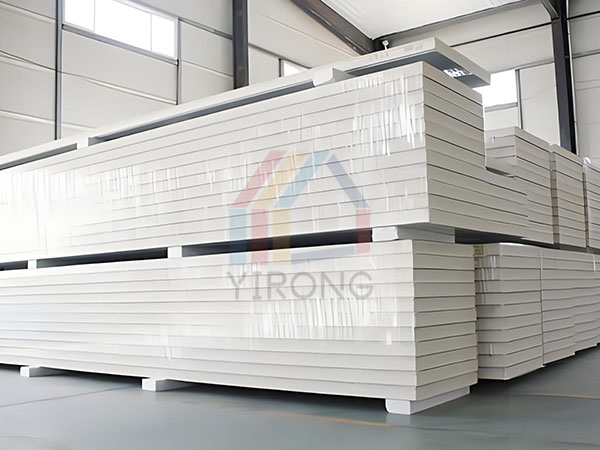
Against the backdrop of a surge in demand for global cold chain facilities, cold storage, as a core infrastructure, has a direct impact on storage costs and cargo quality due to its insulation performance. 50mm insulation panels have become the preferred material for the construction of small and medium-sized cold storages due to their lightweight, high insulation, and easy installation.
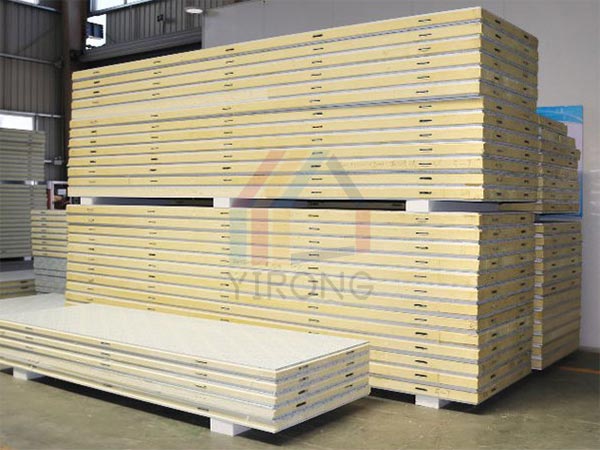
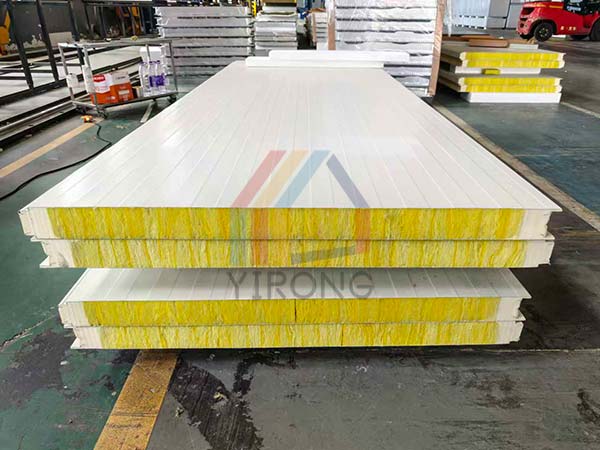
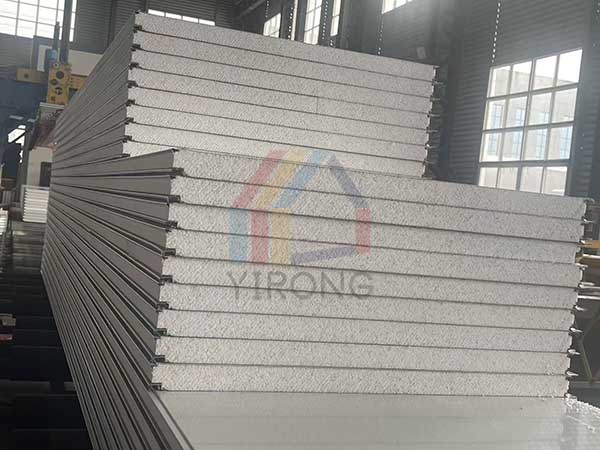
50mm insulation panels (usually referring to 50mm thick polyurethane PU, rock wool or polyisocyanurate PIR sandwich panels) are widely used in the following types of cold storage due to their precise insulation performance and structural adaptability:
Food cold storage (0℃~-18℃) has extremely high requirements for the temperature control accuracy and moisture resistance of the insulation layer. The thermal conductivity of the 50mm insulation board is as low as 0.022-0.028W/(m·K) (polyurethane material), which can maintain the temperature fluctuation in the warehouse ≤±1℃ at -18℃, meeting the long-term storage needs of fresh food, meat and dairy products. For example, in the fruit fresh-keeping warehouse in tropical Southeast Asia (such as the pre-cooling warehouse for banana export in the Philippines), the 50mm polyurethane insulation board can effectively block the high temperature above 35℃ outside, and cooperate with the refrigeration unit in the warehouse to reduce energy consumption by more than 25%.
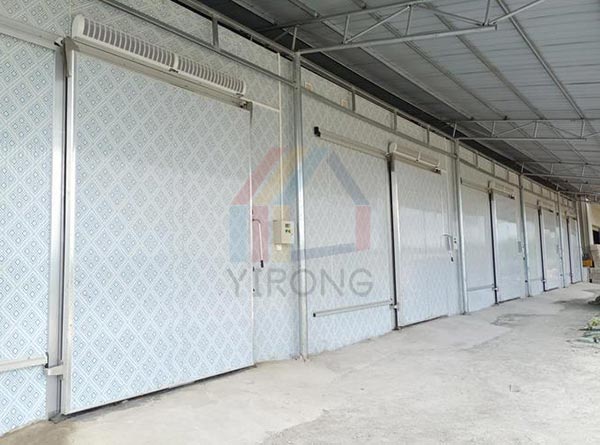
Pharmaceutical cold storage (2℃~8℃ cool storage, -20℃ biological preparation storage) must comply with strict GSP (Good Business Practice for Pharmaceuticals) certification, requiring the insulation material to be odorless, not release harmful substances, and have a fire protection level ≥B1. 50mm rock wool sandwich insulation board (fireproof grade A1) or polyurethane board (B1) can meet this demand: the high melting point of rock wool board (≥1000℃) can resist sudden fire, and the closed-cell structure of polyurethane board prevents condensation water from penetrating and contaminating drugs. European pharmaceutical storage centers (such as Bayer Biological Products Warehouse in Germany) use a large number of 50mm polyurethane insulation boards to ensure long-term stability in ultra-low temperature environments of -80℃.
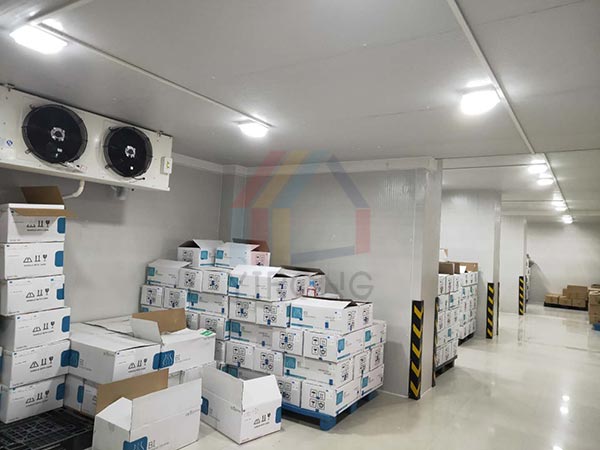
Chemical raw materials (such as liquefied natural gas LNG, refrigerants) need to be explosion-proof and corrosion-resistant. 50mm insulation panel can be upgraded to explosion-proof type by coating the surface with aluminum foil or adding flame retardants: the aluminum foil layer reflects radiant heat and reduces the surface temperature; flame retardants (such as bromine and phosphorus) improve the flame retardancy of the material. LNG transit depots in Middle Eastern oil countries (such as Jebel Ali Port in the UAE) often use 50mm aluminum foil polyurethane insulation board, which not only meets the ultra-low temperature requirements of -162℃, but also passes ATEX explosion-proof certification (European explosion protection standard) to ensure operational safety.
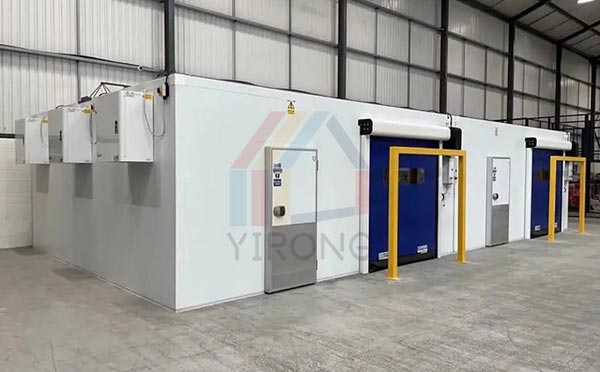
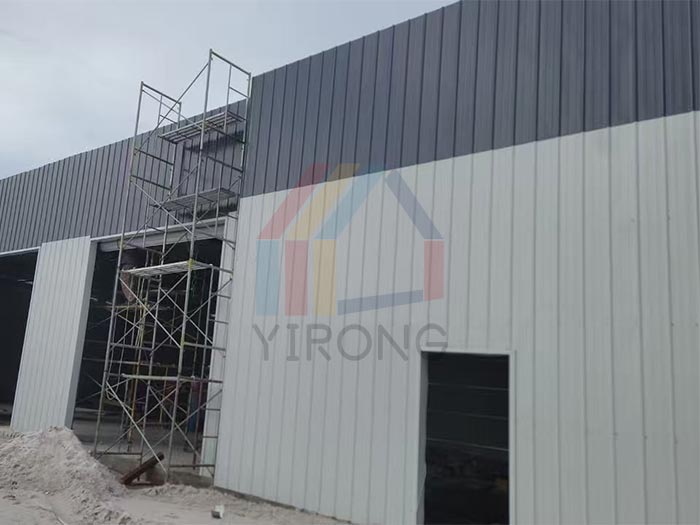
The explosive growth of e-commerce and cross-border logistics has driven a surge in demand for modular cold storage. The 50mm insulation board adopts factory prefabrication technology (error ≤1mm), and only bolts are needed on site to complete the installation. A warehouse of more than 500㎡ can be built in a single day, saving 70% of the construction time compared with traditional concrete cold storage. The US Amazon Logistics Center (FBA warehouse) uses 50mm color steel polyurethane sandwich panels, with a detachable design, to support quarterly expansion (such as expanding the storage area by 20% before "Black Friday"), greatly reducing temporary storage costs.
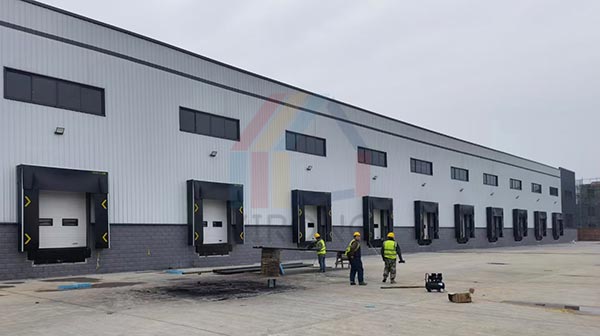
The demand for cold storage in different regions of the world varies significantly due to climate, industry and regulations. 50mm insulation panels need to be optimized to adapt to localized scenarios:
The annual average temperature in Southeast Asia (such as Indonesia and Vietnam) is 30℃+, the humidity is >80%, and some areas near the sea (such as Bangkok Port in Thailand) are subject to salt spray corrosion. 50mm insulation panel must meet the following requirements:
Material upgrade: Use aluminum-zinc steel plate (coating ≥ 180g/㎡) + polyurethane core material (water absorption ≤ 0.3kg/㎡), resistant to moisture and heat deformation.
Structural design: Add board seam sealant (such as silicone weathering glue) to prevent rainwater from penetrating and causing thermal insulation performance to decrease.
Certification and adaptation: Pass ASTM D5456 (American Society for Testing and Materials) wind resistance test (wind speed ≥ 50m/s) to cope with typhoon-prone areas (such as the Philippines, which has an average of 10-15 typhoons per year).
The lowest temperature in winter in Northern Europe (such as Stockholm, Sweden) is -40℃, and Canada (such as Vancouver) is wet and snowy in winter. 50mm insulation panel needs to be strengthened:
Core material density: Polyurethane density is increased to 45kg/m³ (conventional 35-40kg/m³) to avoid shrinkage and cracking of the core material at low temperatures.
Surface treatment: The steel plate adopts embossed galvanizing process (zinc layer ≥120μm) to improve the adhesion with the core material and prevent delamination caused by freeze-thaw cycles.
Regulatory compliance: Meet the fire protection requirements of Canada CAN/ULC-S101 (National Building Code) (combustion performance ≥B1 grade).
The logistics infrastructure in Africa (such as Johannesburg, South Africa) and South America (such as Sao Paulo, Brazil) is weak, and the budget for cold storage construction is limited. The advantages of 50mm insulation panels are:
High cost performance: Compared with traditional brick-concrete warehouses (cost of about 350/㎡), the cost of 50mm sandwich panel cold storage is only 180-220/㎡, reducing the initial investment by 40%.
Easy maintenance: The surface color steel plate is scratch-resistant, and local damage can be quickly repaired by gluing and metal patches (without removing the entire board).
Localized adaptation: Supports customized sizes (such as width 1.2m, height 6m), and is suitable for narrow-gauge transport trucks commonly seen in Africa (carriage width ≤2.5m).
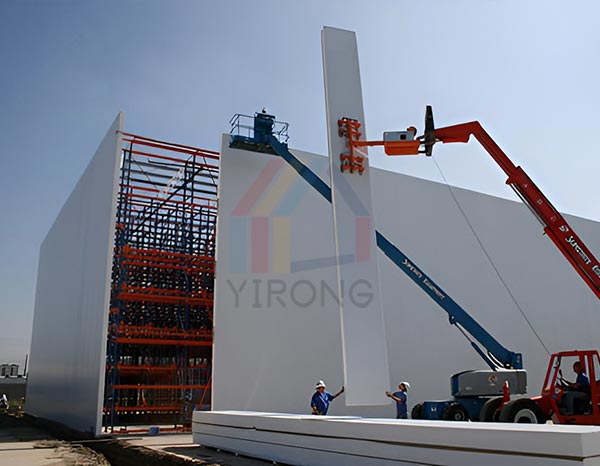
In the 50mm insulation board market, Yirong sandwich panels have become the preferred supplier for global cold storage builders with their full chain advantages in materials, processes, and services:
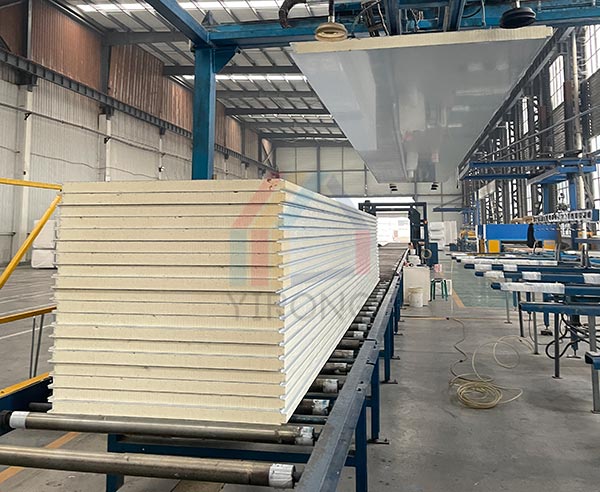
Yirong uses self-formulated polyurethane (PU) and rock wool (RW), with a core material density deviation of ≤±2kg/m³ (industry standard ±5kg/m³), and a thermal conductivity coefficient that is stable at 0.022W/(m·K) (better than the national standard GB/T 23932-2009 of 0.024W/(m·K)). The steel plate is made of Baosteel/Posco first-class galvanized plate (zinc layer 180g/㎡), and the salt spray test is ≥1500 hours (industry average 1000 hours), ensuring maintenance-free for more than 10 years in coastal areas.
Yirong's production base is equipped with German TRUMPF laser cutting equipment and Italian Prima Power bending machine. The forming accuracy of 50mm insulation board reaches ±0.5mm (industry standard ±1mm), and the board seam splicing error is ≤0.3mm, which greatly reduces the risk of cold leakage during on-site installation. All products have passed CE (EU), SGS (Switzerland), and ISO 9001 (International Organization for Standardization) triple certification, and meet the cold storage construction standards of 80% of countries in the world.
Yirong provides different solutions for different regional needs:
Explosion-proof version: add aluminum foil reflective layer + flame retardant (bromine content 12%), and pass ATEX explosion-proof certification.
Medical version: The surface is coated with antibacterial coating (E. coli inhibition rate ≥ 99%), which meets the cleanliness requirements of FDA (U.S. Food and Drug Administration).
Ultra-low temperature version: The core material density is increased to 50kg/m³, and the compression strength at -40℃ is ≥0.2MPa (ordinary board is only 0.1MPa).
From tropical fruit warehouses in Southeast Asia to ultra-low temperature pharmaceutical warehouses in Northern Europe, from e-commerce transit warehouses in the United States to cross-border logistics warehouses in Africa. 50mm insulation board has become a universal solution for global cold chain scenarios with its precise thermal insulation performance, flexible adaptability and reliable durability. Choosing Yirong sandwich panel supplier can not only obtain high-quality 50mm insulation panel, but also rely on its global service network and customization capabilities to reduce costs, improve quality and increase efficiency for cold storage construction.
Whether it is a new cold storage or an old warehouse renovation, 50mm insulation panel is the optimal solution for both cost and performance, which is the consensus of the global cold chain industry.