Zhengzhou, Henan Province, China
Now Contact: Do you need PU/EPS/Rock Wool sandwich panels?
Zhengzhou, Henan Province, China
Now Contact: Do you need PU/EPS/Rock Wool sandwich panels?
In Thailand, whether in industrial zones around Bangkok or in Chonburi and Rayong provinces along the Eastern Economic Corridor (EEC), you'll find a common phenomenon. The vast majority of newly built factories use corrugated steel sheets for their exterior walls.
For business owners planning to invest and set up factories in Thailand, facing the hot, rainy, and typhoon-prone tropical climate, the first decision to make is. Is it appropriate to use corrugated steel sheets for factory exterior walls?
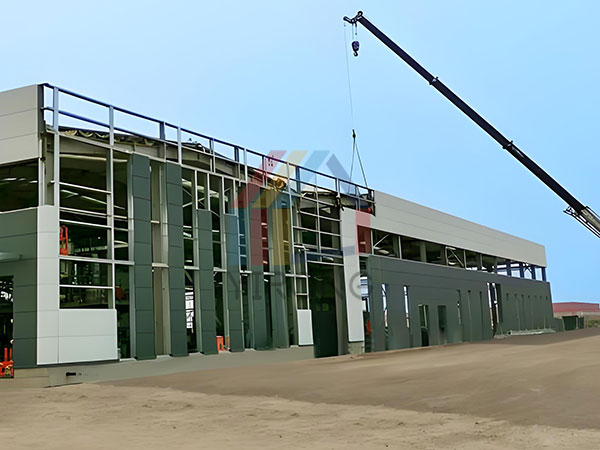
In Thailand, the construction industry highly values light steel structures and prefabricated construction. The dominant position of corrugated steel sheets as an exterior wall material is mainly based on the following three points:
1. Extremely fast construction speed
Thailand has a tropical monsoon climate, with the year divided into a hot season, a rainy season, and a cool season. Rainy season (May-October) delays are the biggest cost risk for projects. Prefabricated steel panels, installed in a modular fashion, increase construction speed by over 50% compared to traditional brick-and-mortar structures or concrete exterior walls. For companies eager to start production and obtain BOI (Board of Investment) incentives, time is money.
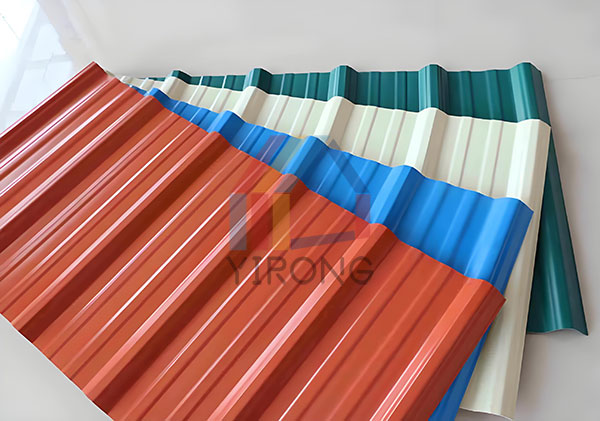
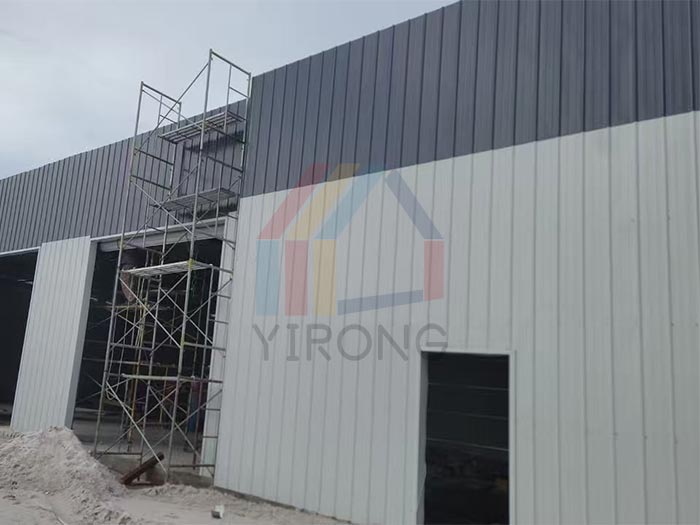
Corrugated Steel Sheets
2. Superior Insulation and Wind Resistance
Many people mistakenly believe that corrugated iron roofs are very hot, but the composite sandwich panels currently used in the Thai market solve this problem.
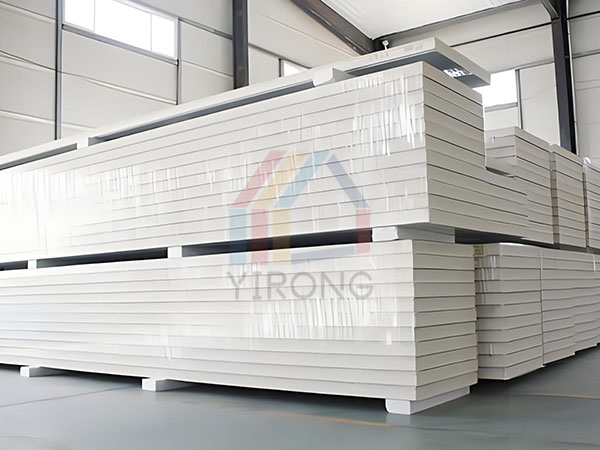
Core Materials: Local Thai manufacturers generally provide polyurethane (PU) or rock wool sandwich panels.
Insulation: PU sandwich panels have extremely low thermal conductivity, effectively blocking the high temperatures of the tropical sun and reducing the air conditioning load inside the factory.
Wind Resistance: The Gulf of Thailand is frequently affected by tropical storms. Steel sandwich panels produced by reputable manufacturers, through professional purlin design and interlocking technology, can withstand winds of force 10-12, making them far safer than ordinary brick walls.
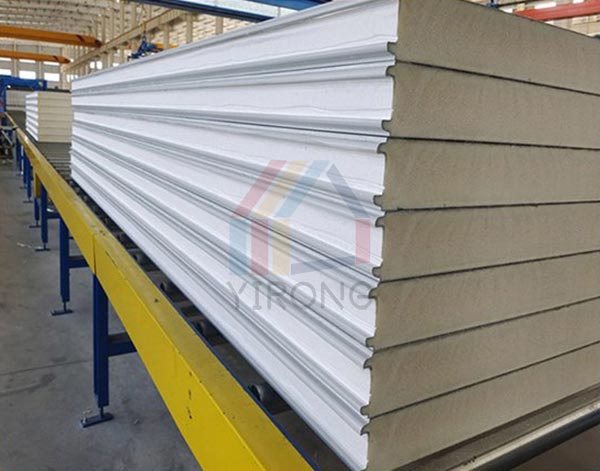
PU Sandwich Wall Panels
3. Superior Seismic Performance
Although Thailand is not an earthquake-prone area, tremors were still felt in the north. Color-coated steel sheets are lightweight and have low foundation requirements, making them structurally safer than brittle masonry structures under seismic waves.
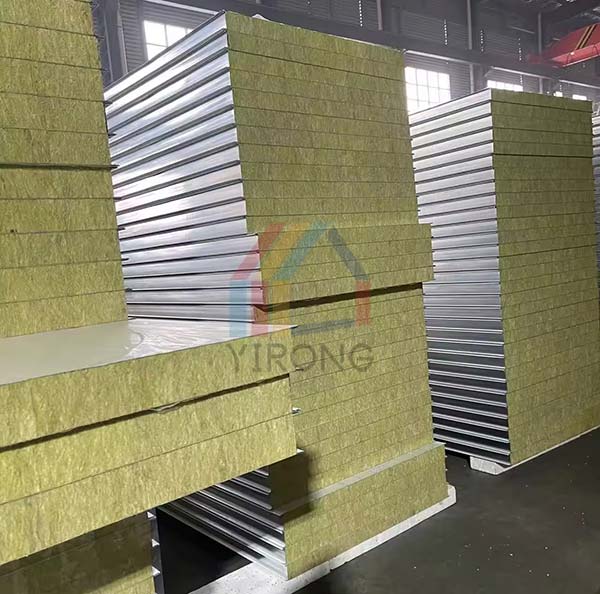
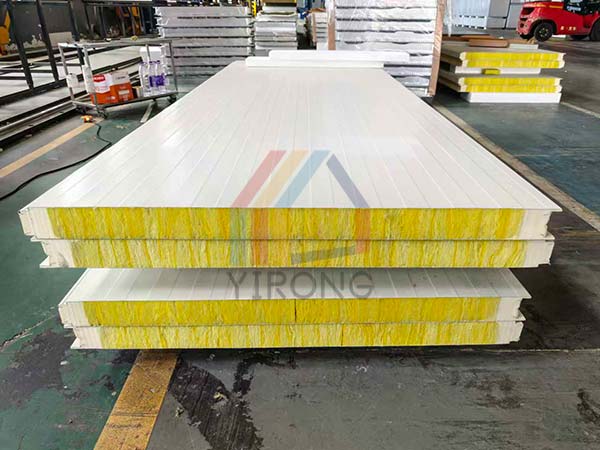
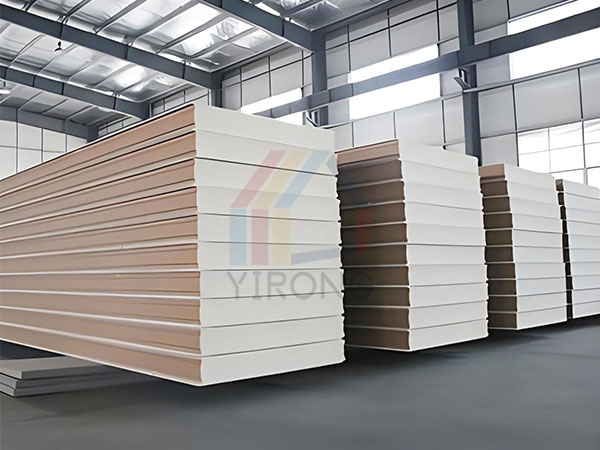
Rock Wool Sandwich Panels
If you are looking for suppliers in Thailand, understanding the following industry rules and market conditions can help you save at least 20% on costs.
1. Raw Material Import Dependence and High Price Fluctuations
Thailand's color-coated steel sheet substrates are largely dependent on imports, especially from China, South Korea, and Japan. Prices are closely linked to international iron ore prices and the Thai baht exchange rate.
Current Trend: Currently, the Thai market has the strongest demand for 0.45mm-0.60mm thick aluminized zinc-coated steel sheets. It is recommended that companies lock in the base price of steel sheets when signing purchase contracts to avoid suppliers demanding price increases midway due to rising raw material costs.
2. Competition Between Local Brands and Other Brands
Japanese brands (such as JFE, NS Bluescope): Dominate the high-end market. Excellent quality, with a highly corrosion-resistant coating (suitable for coastal industrial areas like Rayong), but more expensive and with strict payment terms.
Chinese brands (such as CangLong, WISKIND, YiRong): High cost-performance ratio. In recent years, with the increasing presence of Chinese companies in Thailand, many high-quality Chinese-owned panel manufacturers and local assembly plants (such as brands under Siam Cement) offer cost-effective options. For standard factory buildings, Chinese brand sandwich panels are perfectly adequate.
3. Stricter Environmental and Fire Safety Regulations
The Department of Industrial Works (DIW) in Thailand is increasingly stringent in its fire safety inspections of factory buildings.
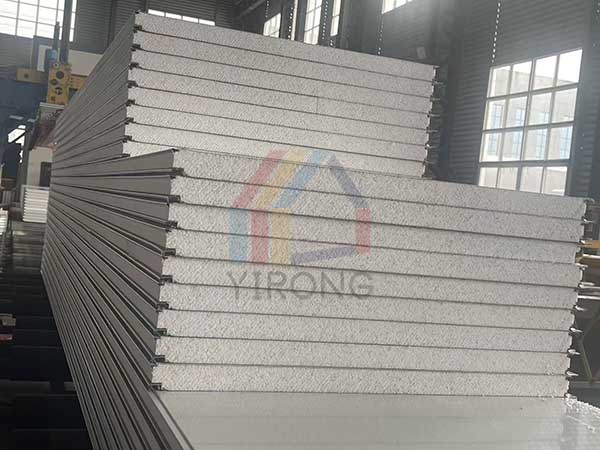
Note: If you are building a chemical or warehousing factory, the exterior walls must use rock wool sandwich panels. Rock wool is a Class A non-combustible material. While cheaper, using ordinary EPS (polystyrene) foam sandwich panels may fail fire safety inspections and could even lead to demolition orders.
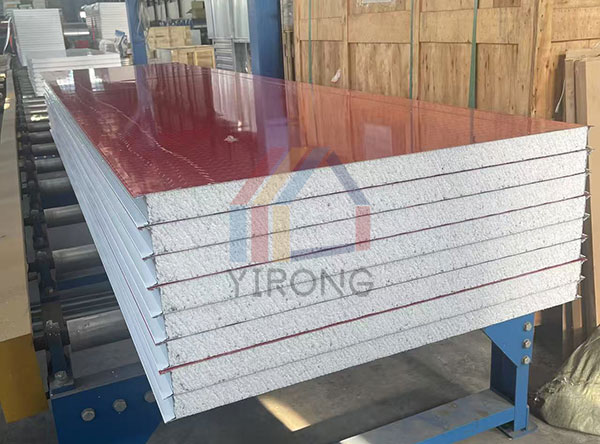
EPS Foam Sandwich Panels
While corrugated steel panels offer significant advantages, it's easy to make mistakes if you don't understand the practices of local construction teams. Here are some suggestions:
1. Corrosion Prevention is Paramount
Thailand has high humidity, and the air in coastal industrial areas (such as Laem Chabang and Matapong) has high salt content.
Recommendation: Do not choose ordinary galvanized steel (GI) panels to save money. You must use aluminum-zinc coated panels (Galvalume, AZ150 and above), and the topcoat should ideally be a PVDF (fluorocarbon) coating, whose weather resistance and salt spray corrosion resistance far surpass ordinary polyester coatings (PE).
2. Avoid Shoddy Edge Finishing
Local Thai workers sometimes have careless construction habits. 90% of factory exterior wall leaks do not originate from the panels themselves, but from the finishing details (around windows, eaves, expansion joints).
Recommendation: Clearly require detailed drawings of these details in the construction contract, and check the quality of the waterproof sealant application during installation. Thailand's frequent torrential rains and strong winds mean that even small gaps can allow water to seep in.
3. Thermal Expansion and Contraction and Structural Design
While Thailand's temperature variations are not as extreme as in temperate countries, the surface temperature of ferrous metals under direct sunlight can reach over 70°C.
Recommendation: The length of the color-coated steel panels should not be too long (ideally no more than 15 meters). Appropriate expansion joints must be installed to prevent cracking of the panels or loosening of fixing bolts due to thermal expansion and contraction.
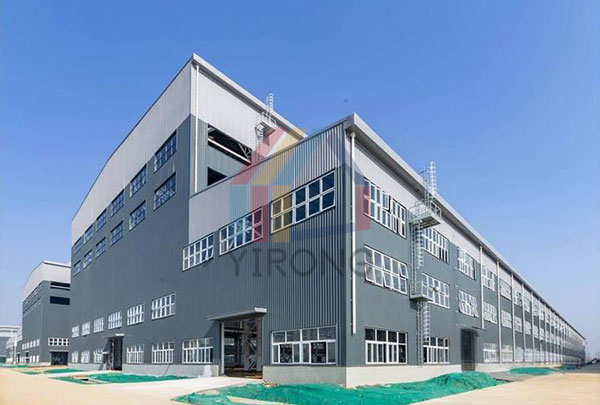
The conclusion is: Absolutely, and corrugated steel sheets are the preferred solution for the exterior walls of industrial plants in Thailand.
It not only meets the local demand for efficient, economical, and durable construction but also fully adapts to the harsh conditions of the tropical climate. As long as you follow these principles when selecting materials:
Choose fluorocarbon (PVDF) with a high-coating (AZ150) for coastal areas.
Choose rock wool for fire resistance requirements.
Closely monitor waterproofing at the edges during construction.