Zhengzhou, Henan Province, China
Now Contact: Do you need PU/EPS/Rock Wool sandwich panels?
Zhengzhou, Henan Province, China
Now Contact: Do you need PU/EPS/Rock Wool sandwich panels?
In 2026, major economies worldwide have entered a zero-tolerance era for fire safety reviews of industrial and commercial building envelopes. The core reason why Class A non-combustible rock wool sandwich panels have jumped from a recommended option to a mandatory requirement in many countries lies in their irreplaceable extreme fire resistance.
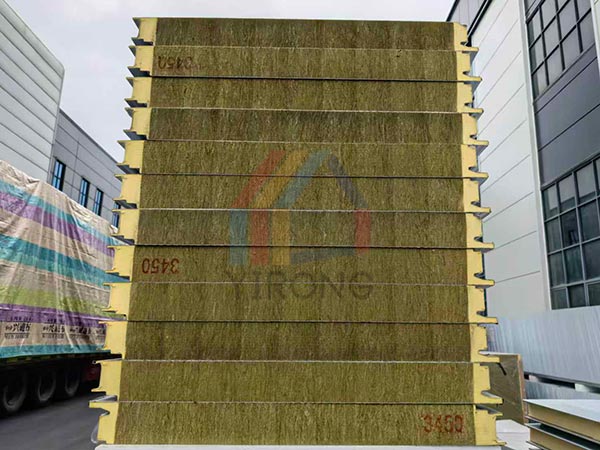
Rock wool core material is a natural Class A non-combustible material with a fire resistance limit of up to 4 hours and the ability to withstand temperatures exceeding 1000°C. In 2026, with frequent extreme weather events and a surge in high-density industrial parks, choosing Class A rock wool board is no longer just about passing fire safety inspections, but also about building an 'absolute firewall' to protect the company's core assets and the lives of its employees.
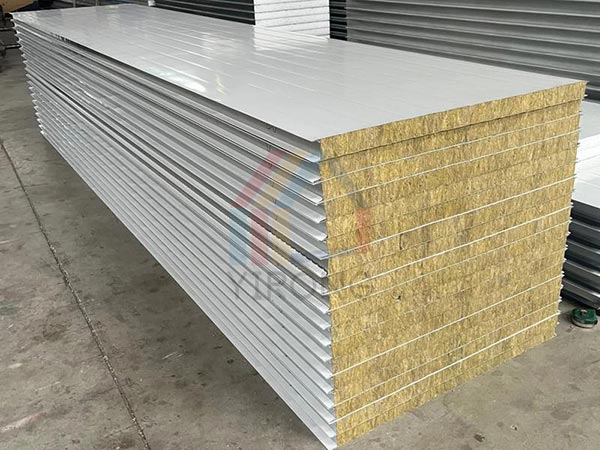
The following is a combination of the latest global fire safety regulations (such as the latest building codes in the EU, North America, and Asia Pacific) and materials science in 2026.
In 2026, cross-border e-commerce warehousing and intelligent manufacturing workshops will mostly exist in the form of large-scale, multi-span, and high-density parks. Once a fire breaks out in a warehouse, if the enclosure materials are flammable, the flames will spread rapidly through the walls and roofs to the entire park within minutes, causing irreversible and devastating penetrating damage.
In the past, many buildings used ordinary polystyrene (EPS) or low-end polyurethane as sandwich materials. Although these materials have good insulation and low cost, they will:
Spread rapidly: The fire spreads geometrically along the walls, forming a "three-dimensional fire."
Release highly toxic smoke: Most fire injuries and deaths are not directly caused by high-temperature burns, but by the inhalation of deadly toxic fumes (such as hydrogen cyanide and carbon monoxide) released by burning polystyrene foam. The new regulations for 2026 aim to eliminate toxic fumes at their source.
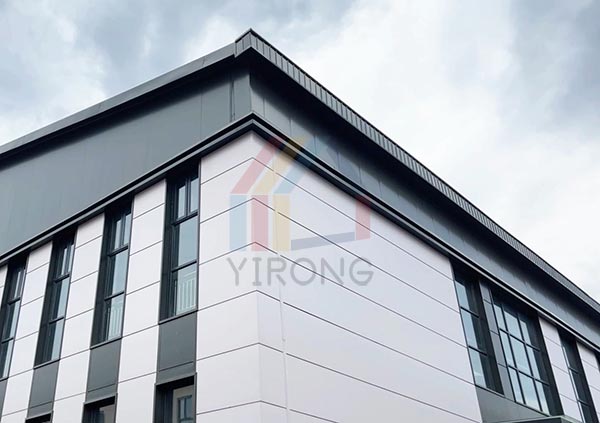
As an inorganic mineral fiber, rock wool is formed by melting natural rocks (such as basalt and dolomite) at high temperatures. In 2026, it will become the undisputed leader in fire safety standards for building shell applications due to three major physical limits.
The core temperature of a typical fire is usually between 800°C and 1000°C. The melting point of rock wool core material far exceeds 1000°C, meaning that even if the double-layered color-coated steel sheet is burned through during a fire, the internal rock wool will remain physically intact. It will not carbonize, drip, or contribute to the fire, forming a robust fire barrier.
In structural engineering, the fire resistance rating refers to the time it takes for a building component to lose its load-bearing capacity, integrity, or insulation properties after being exposed to fire in a standard fire resistance test.
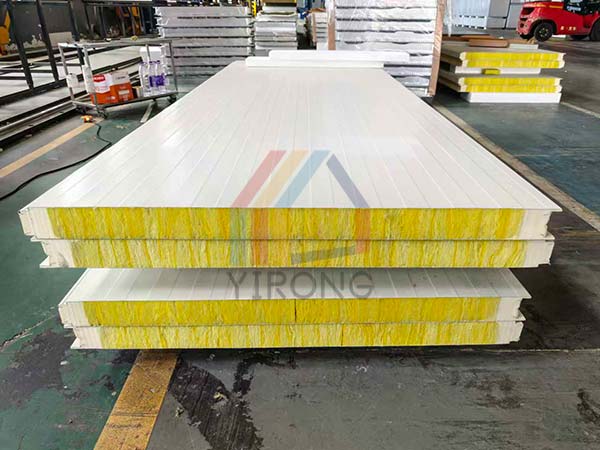
Yirong Group's high-density industrial rock wool sandwich panels, depending on their thickness, can achieve a maximum fire resistance rating of 4 hours for the entire system.
This provides crucial time for firefighters, ensuring the safe evacuation of occupants and protecting the building's structural framework (such as H-beams and columns) from softening and collapsing due to high temperatures.
Because rock wool is made from natural stone fibers, it contains no volatile organic compounds. Throughout a fire, it produces no open flames or releases no harmful smoke, maximizing the clarity and safety of escape routes.
Faced with increasingly stringent regulations, factory owners and investors who choose the wrong building materials may face not only being ordered to halt operations for rectification and being unable to clear customs, but also financial crises such as being refused insurance coverage or experiencing skyrocketing premiums.
Due to the inherent physical drawbacks of pure rock wool sandwich panels—such as easy water absorption and slightly weaker airtightness at the tongue and groove joints—high-end industrial buildings in 2026 will uniformly promote a composite evolution solution: polyurethane (PU) double-sided edge-sealed rock wool boards.
Fire-resistant Interlocking Design: The center of the board uses 100% Class A absolutely non-combustible high-density rock wool, ensuring that the entire wall and roof perfectly pass the 4-hour extreme fire resistance test and the ultra-high fire resistance of 1000°C.
Polyurethane Airtight Edge Sealing: High-performance polyurethane (PU) is used for integrated injection molding edge sealing on both sides of the tongue and groove joints of the board.
Win-win effect: The high closed-cell rate of polyurethane completely blocks external moisture from penetrating the rock wool, eliminating the "cold bridge effect" and resulting in perfect insulation and high airtightness. At the same time, the core rock wool also locks in the fire safety limits of the entire building.
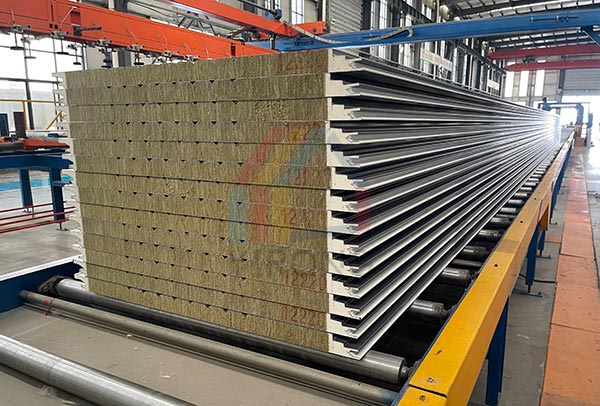
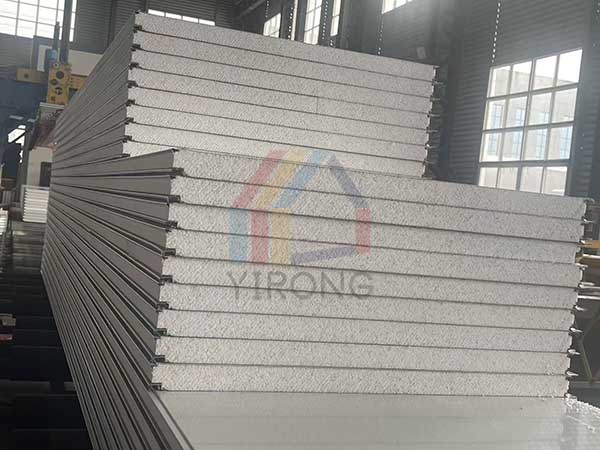
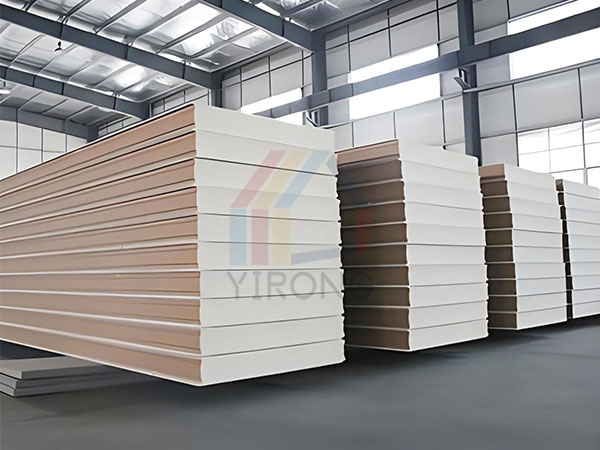
Polyurethane-Edged Rock Wool Panels
As a global one-stop expert in steel structure and green building material solutions, Yirong Group has already aligned its 2026 fire safety regulations for global buyers within its digital factory.
The polyurethane-sealed rock wool sandwich panels produced by Yirong have undergone rigorous testing by authoritative third-party organizations (such as SGS, CE, etc.), fully complying with North American (ASTM), European (EN), and other international fire and engineering safety standards, ensuring hassle-free customs clearance at the destination port and one-time acceptance by the local fire department.
Rejecting low-end, unevenly dense handmade panels. Yirong's heavy-duty, fully automated continuous production line ensures that rock wool fibers and steel plates on both sides achieve rigid bonding under high pressure, maintaining the fiber direction perpendicular to the steel plates. This not only gives the panels the mechanical toughness to withstand wind, hurricanes, and heavy snowstorms, but also guarantees a uniform fire resistance limit for the entire panel.
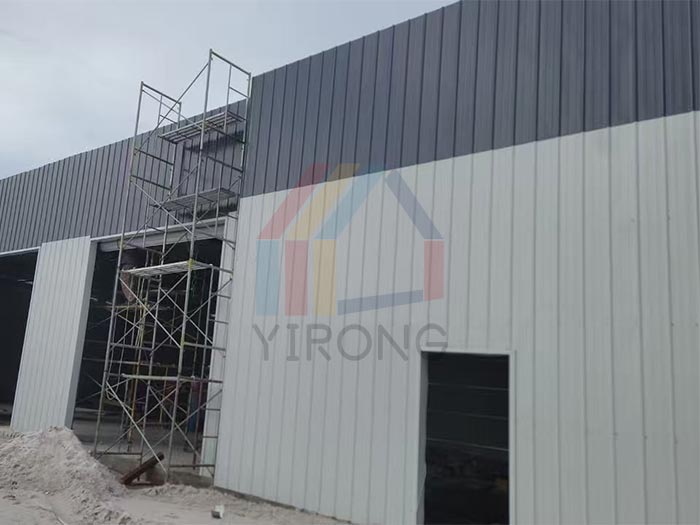
In a modern multi-span brewery project in Azerbaijan, exceeding 10,000 square meters, to perfectly comply with the stringent fire safety regulations for the local food industry and densely populated areas, Yirong Group supplied tens of thousands of square meters of high-standard polyurethane-edged rock wool panels in a closed-loop system. The panels were successfully shipped and installed across land and sea, earning high praise from international clients.
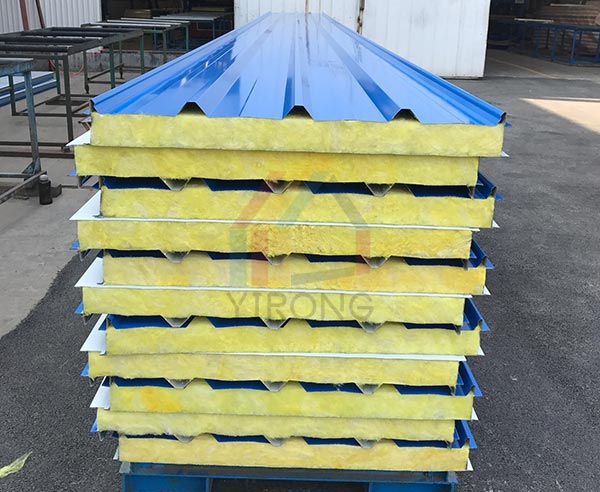
For industrial and commercial buildings constructed in 2026, safety and compliance are the greatest cost-saving measures. Choosing a Class A non-combustible rock wool board (or polyurethane-edged rock wool sandwich panel) system is not only the ultimate long-term preservation of a company's fixed assets, but also a profound respect for life and responsibility.
Do you need recommendations for rock wool board thicknesses and solutions that best meet local fire safety regulations (e.g., 1-hour/2-hour/4-hour fire resistance) for your projects in your country?
Obtain complete technical specifications, thermal resistance (R-value), and third-party quality inspection certificates for high-density polyurethane-sealed rock wool boards.