Zhengzhou, Henan Province, China
Now Contact: Do you need PU/EPS/Rock Wool sandwich panels?
Zhengzhou, Henan Province, China
Now Contact: Do you need PU/EPS/Rock Wool sandwich panels?
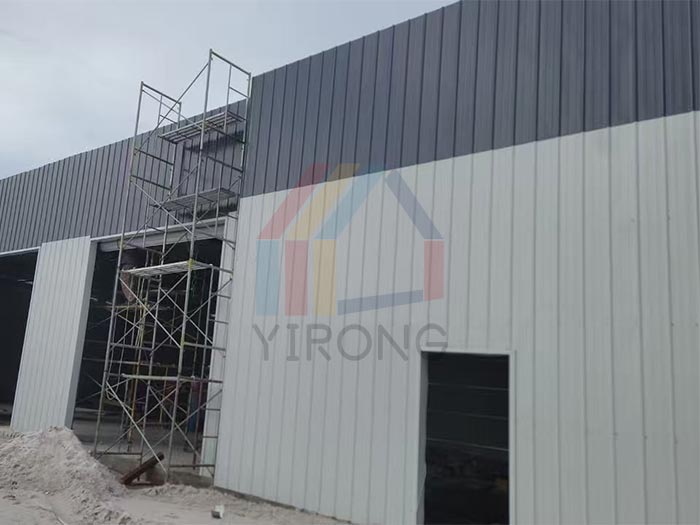
In the tropical monsoon climate of the eastern industrial corridor in Thailand, a modern factory building covering an area of over 8000 square meters has been fully completed. This is a one-stop solution tailored by Yirong Prefabricated Building Manufacturer for local manufacturing enterprises in Thailand, featuring fast construction, energy efficiency, and weather resistance. With steel structure as the main body, it integrates diverse materials and localized design, becoming another benchmark case for Chinese prefabricated building enterprises to serve the Southeast Asian market.
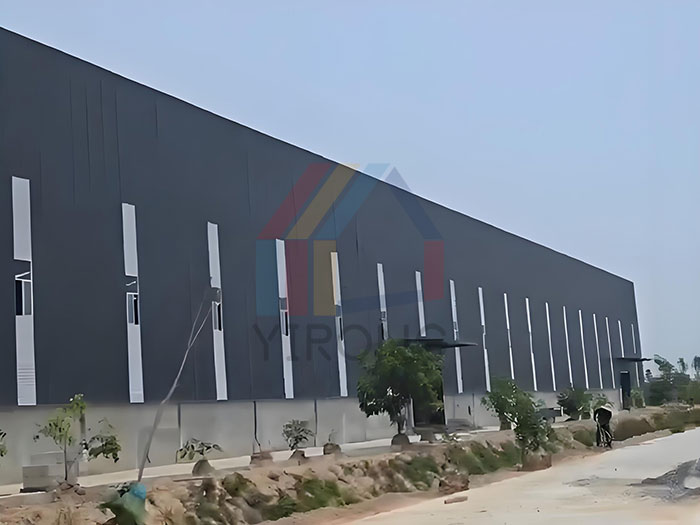
The main body of the project adopts the high-strength steel structure system independently developed by Yirong. The columns and steel beams are Q355B hot-rolled H-shaped steel, and the surface is hot-dip galvanized (the thickness of the galvanized layer is ≥ 275g/㎡). Even in the face of the annual average of 7-10 typhoons (wind speed exceeds 12 levels) and high-frequency rainstorm in Thailand, the structural stability can still be maintained. All steel components are pre processed in the factory (cutting, welding, drilling error ≤ 2mm), and only bolt connections and simple corrections are required on site, which shortens the construction period by 40% compared to traditional cast-in-place concrete structures. It only takes 45 days from foundation construction to main body sealing, greatly reducing the impact of the rainy season on the construction period.
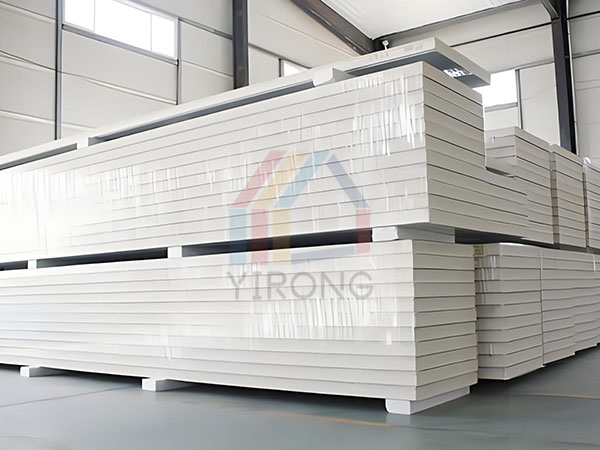
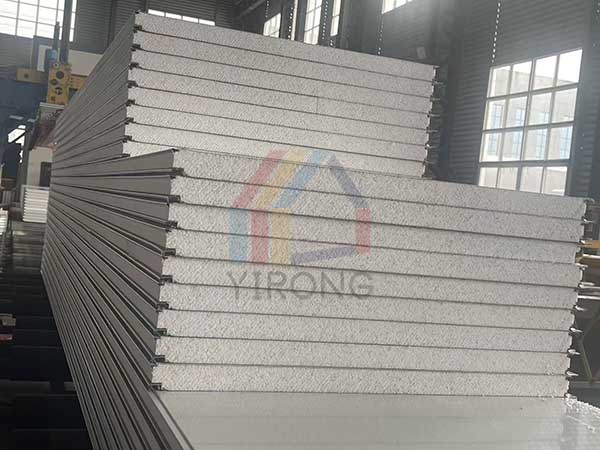
The factory building wall adopts a composite structure of half meter thick sintered brick wall and black polyurethane insulation board. The inner brick wall is constructed with local clay bricks (in accordance with Thai building codes), with a thickness of 500mm. It not only bears part of the load and enhances sound insulation (reducing factory noise by 15dB), but also regulates indoor temperature through the heat storage characteristics of the bricks. The outer layer is covered with 50mm thick black polyurethane insulation board (fire rating B1, thermal conductivity ≤ 0.024W/(m · K)). The black surface efficiently absorbs solar radiation heat and converts it into far-infrared heat energy, reducing temperature fluctuations on the wall surface. The brick wall and insulation board are double fixed with special adhesive and stainless steel anchor bolts, and there is no risk of detachment in high temperature and high humidity environments (with an average annual humidity of 85%), which not only meets the requirements of Thailand's "Industrial Building Fire Protection Code" (FDI 2021), but also reduces indoor air conditioning energy consumption by 28%.
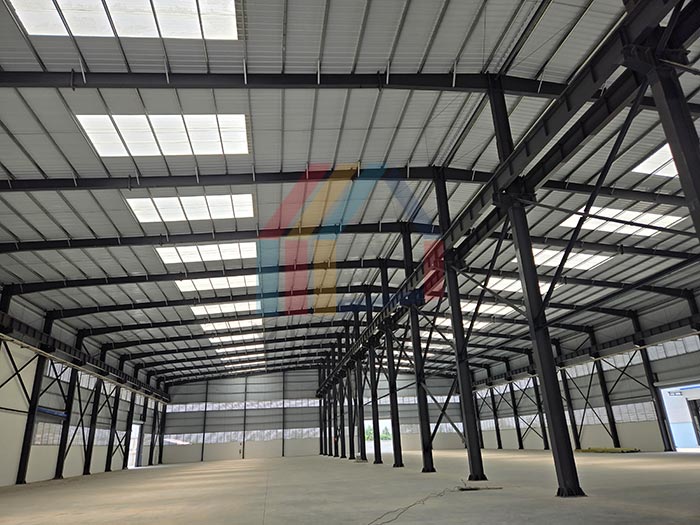
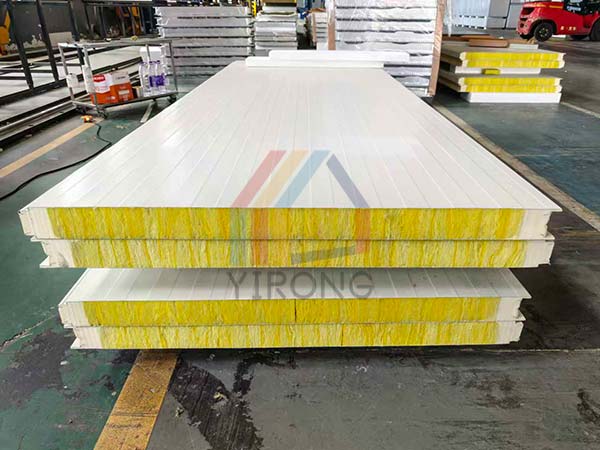
The roof adopts a three-layer composite design of metal panels, insulation cotton, and sun panels. The bottom layer is made of 0.8mm thick galvanized steel plate (yield strength ≥ 275MPa), and the surface is sprayed with weather resistant polyester paint (service life ≥ 25 years). It is connected with concealed purlins to eliminate the hidden danger of rain leakage caused by traditional nailing. The middle layer is covered with 80mm thick glass wool (with a density of 120kg/m ³), which reflects heat radiation through aluminum foil veneer, improving insulation performance by 60% compared to a single metal plate. The top layer is covered with a 10mm thick double-layer hollow solar panel (with a transmittance of 82% and a UV transmittance of ≤ 5%), which not only meets the natural lighting needs of the workshop (reducing daytime lighting electricity consumption by 30%), but also resists the impact of debris carried by typhoons through the impact resistance of PC material (250 times that of ordinary glass). The overall slope of the roof is 12 ° (suitable for the concentrated precipitation in the rainy season in Thailand). The cornice is equipped with a guide channel and PVC downspouts. The drainage efficiency in rainstorm is up to 50L/(s · m2), and there is no water leakage.
The Yirong team has deeply integrated into the Thai market, and has collaborated with local meteorological departments to analyze 10-year climate data (such as Bangkok's annual average temperature of 32 ℃ and rainy season precipitation of 1800mm) and optimize material parameters accordingly. Mid term dispatch of a technical team to provide on-site guidance, coordinate the joint construction of Chinese and Thai workers (train 20 local technical workers), and ensure the accuracy of brick wall masonry and steel structure connection. We will provide a 10-year warranty service in the later stage (including regular anti-corrosion inspections and insulation layer performance testing), and promise to localize inventory of key materials (such as polyurethane boards and polycarbonate panels) and respond to maintenance needs within 48 hours.