Zhengzhou, Henan Province, China
Now Contact: Do you need PU/EPS/Rock Wool sandwich panels?
Zhengzhou, Henan Province, China
Now Contact: Do you need PU/EPS/Rock Wool sandwich panels?
In today's world of frequent extreme weather events, building envelope systems are facing unprecedented challenges. As the "skin" of modern industrial and commercial buildings worldwide, polyurethane (PU/PIR) sandwich insulation panels are widely used in various harsh environments due to their excellent physical properties.
So, how do PU sandwich panels actually perform in the face of the three major natural disasters: hurricanes, blizzards, and extreme heat?
In the Caribbean islands, along the Southeast Asian coast, and in the North American hurricane belt, the core threats to buildings are strong wind suction and debris impact.
Mechanical Performance: High Shear Strength and Structural Integration
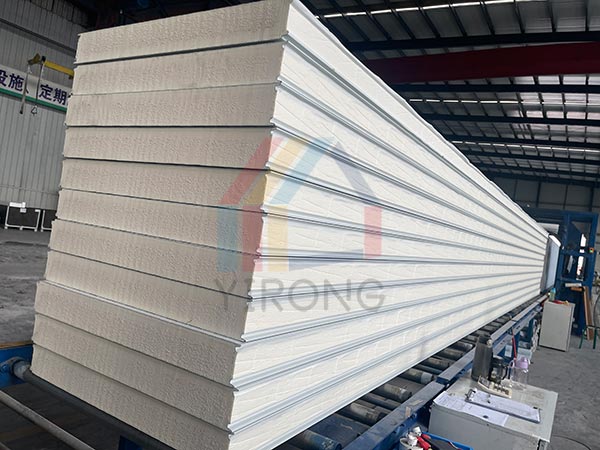
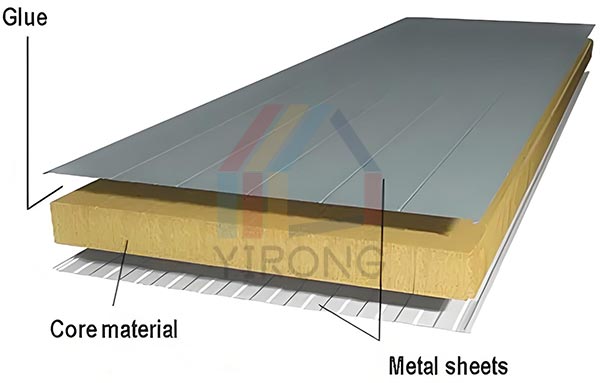
PU sandwich panels are not simply "steel plates + glue + foam". They are produced through a continuous production line where polyurethane foam is injected under high pressure between two layers of color-coated steel plates, curing to form a three-layer composite "I-beam" structure. This structure endows it with extremely high bending and shear strength.
Key to Connections: Concealed Fastener Design
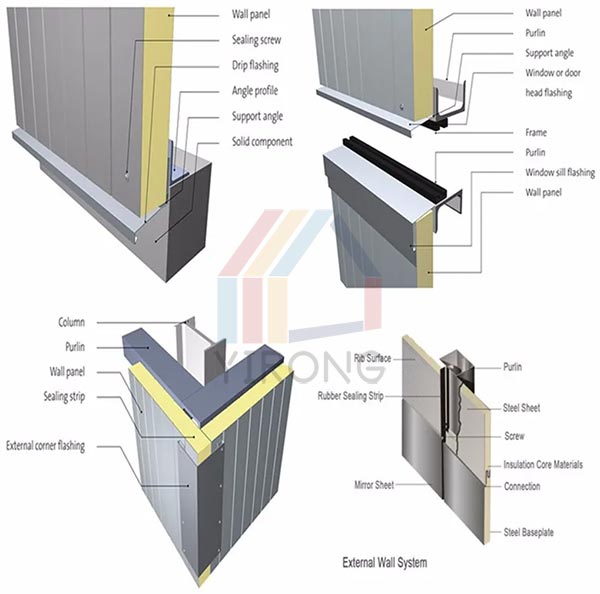
In hurricane-prone areas, the industry recommends PU panels with a concealed fastener design. Bolts are hidden inside the tongue and groove joint, and combined with large-diameter windproof washers, wind loads are evenly distributed across the secondary structure (C/Z-shaped steel purlins), significantly reducing the probability of the panels being torn apart or blown away under negative wind pressure.
Industry Consensus: Properly installed PU sandwich insulation panels systems with the required thickness (e.g., steel plate ≥ 0.5mm, PU density ≥ 40kg/m³) can withstand strong hurricanes with speeds exceeding 200 km/h.
In high-latitude regions such as Canada, Northern Europe, and Northeast China, blizzards present the dual challenges of continuous heavy loads (snow loads) and extremely cold conditions.
Mechanical Performance: Excellent Compressive Strength and Load-Bearing Capacity
Snow accumulation on roofs generates enormous static loads. Rigid polyurethane foam has an extremely high closed-cell rate (≥95%) and excellent compressive strength. When snow loads the roof, the PU core material acts as a rigid support layer, effectively preventing structural depressions or collapses in the roof when combined with the corrugated design of the outer profiled steel sheet.
Thermal Performance: Eliminating Cold Bridges and Condensation
In extremely cold weather, traditional insulation materials are prone to creating cold bridges at internal building joints, leading to frost and dripping water on the interior ceiling, damaging stored goods. PU sandwich insulation panels have one of the lowest thermal conductivity known among building materials globally (~0.022 W/(m·K)). Its dense tongue-and-groove design achieves a seamless enclosure, completely isolating cold air, maintaining a constant indoor temperature, and significantly saving energy consumption for winter heating.
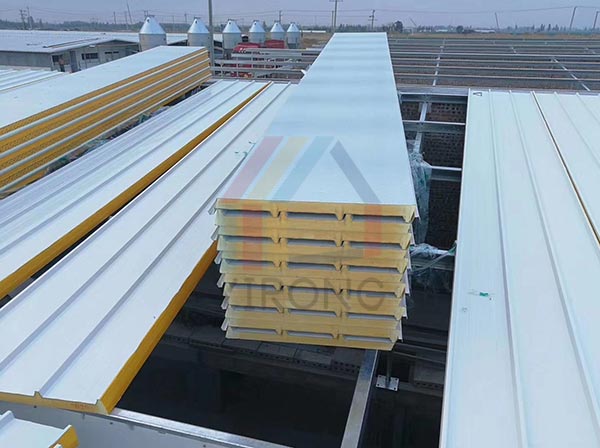
In the Middle Eastern deserts, Africa, or tropical regions, buildings are exposed to temperatures exceeding 40°C and intense ultraviolet radiation for extended periods.
Thermal Performance: Excellent "Sunshade" Effect
Due to the ultra-low thermal conductivity of polyurethane, when the outdoor steel sheet reaches 70℃-80℃ under intense sunlight, the core material can block heat conduction into the room, keeping the indoor temperature within a controllable range. This significantly reduces the energy consumption of air conditioning in industrial cold storage or production workshops (saving up to approximately 35% of energy).
Physical Performance: Creep Resistance and Dimensional Stability
High-quality rigid polyurethane foam exhibits excellent dimensional stability, showing virtually no thermal expansion or contraction deformation over an extremely wide temperature range of -50℃ to +100℃. This means that even under long-term exposure to varying day and night temperatures, the panels will not experience loosening of the tongue and groove joints or glue peeling due to frequent deformation.
Material Protection: Requires a High-Specification Outer Coating
It is important to note that facing high temperatures, the PU core material alone is insufficient. The outer color-coated steel sheet must be upgraded to a PVDF (fluorocarbon) or HDP (high weather-resistant polyester) coating to resist fading, chalking, and coating peeling caused by strong ultraviolet radiation.
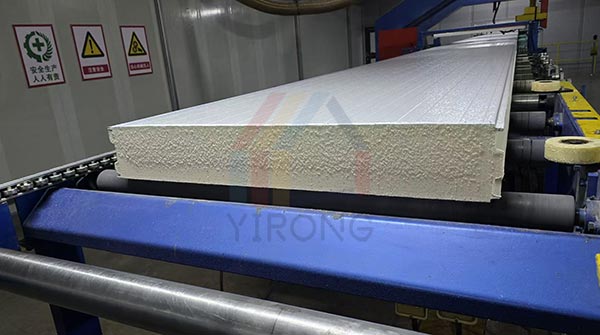
Based on Yirong Group's delivery experience across multiple climate zones globally, to ensure 100% disaster resistance of PU sandwich insulation panels under extreme weather conditions, the following three points must be considered during procurement:
1. Reject handmade panels and resolutely choose fully automated continuous production line panels: Continuous production lines ensure extremely uniform polyurethane foaming and perfect bonding between the steel plate and core material under hot pressing, avoiding panel peeling (bulging) caused by localized voids under high temperatures or hurricanes.
2. Guarantee density: The core polyurethane foam density must reach the industry gold standard of 38-42 kg/m³. Panels with falsely labeled density are prone to internal collapse under the pressure of blizzards.
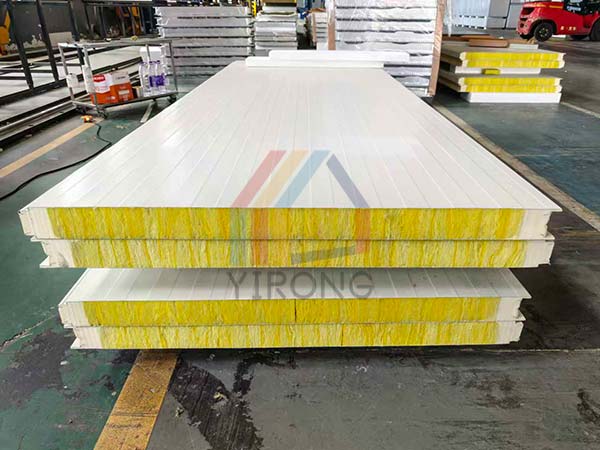
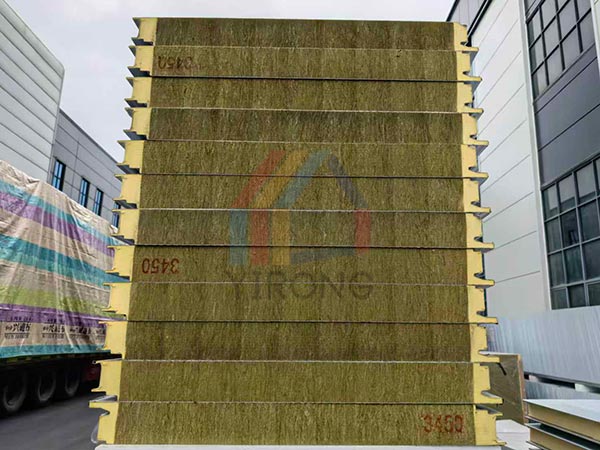
3. Upgrade to polyurethane-sealed rock wool panels: If the project location not only faces extreme weather but also has strict legal requirements for fire resistance rating (Class A). You can choose Yirong's flagship composite solution, which uses Class A fire-resistant rock wool as the core, but seals the tongue and groove edges of the panels with polyurethane (PU). This provides an absolute fireproof shield while retaining the excellent waterproof and airtight properties of polyurethane.
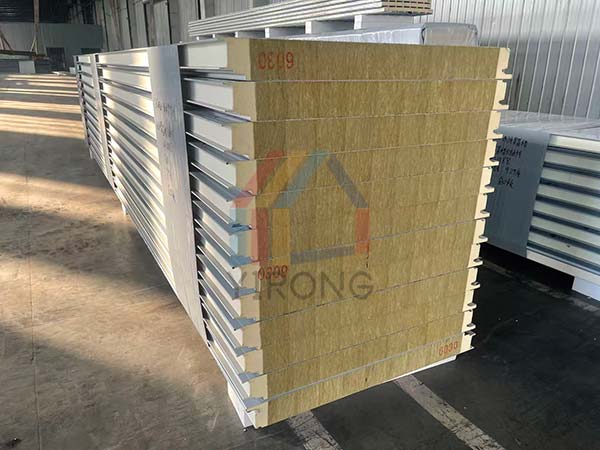
Polyurethane Edge Sealing Rock Wool Board
Whether in hurricane-ravaged Caribbean islands, snow-covered North American highlands, or the scorching African continent, high-quality PU sandwich insulation panels have proven through data and countless real-world examples that they are a highly resilient, safe, and cost-effective building envelope material for modern industrial construction.